

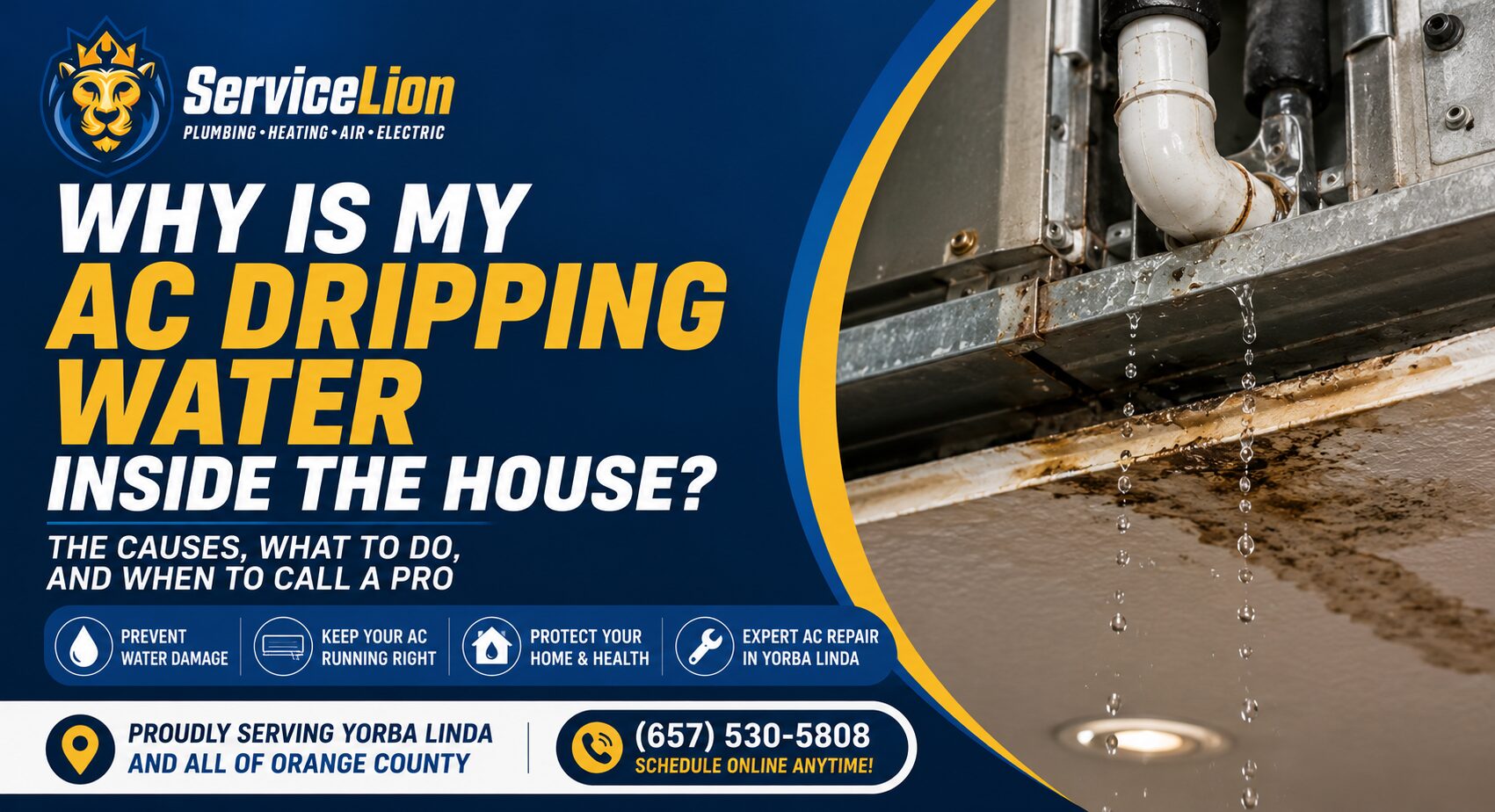
You walk past your hallway closet or glance up at the ceiling near a vent and notice something dripping. Or maybe you spot a puddle forming under the air handler in the garage. Your first thought might be a roof leak — but if it’s happening near your HVAC system, your air conditioner is the more likely culprit.
AC units dripping water inside the home is one of the more common calls we get during Yorba Linda summers. It looks alarming, but it usually comes down to one of a few fixable problems. Here’s what you need to know.
Why Air Conditioners Produce Water in the First Place
Your AC doesn’t just cool the air — it also removes humidity from it. As warm air passes over the cold evaporator coil inside your air handler, moisture condenses on the coil the same way water beads on a cold glass. That condensation drips into a drain pan below the coil and flows out through a condensate drain line.
Under normal conditions, you never see any of this happening. When something goes wrong with that drainage system, water backs up — and eventually ends up somewhere it shouldn’t.
The Most Common Causes
Clogged Condensate Drain Line
This is by far the most frequent cause. The condensate drain line is a small PVC pipe that carries water from the drain pan to the outside of your home (or to a floor drain). Over time, algae, mold, dust, and debris build up inside the line and create a blockage.
When the line is blocked, water has nowhere to go. The drain pan fills up, overflows, and drips into your ceiling, walls, or floor — wherever your air handler happens to be installed.
During Yorba Linda’s hot summers, your AC runs almost constantly, which means it’s pulling a lot of moisture out of the air. A partial clog that causes no problems in spring can turn into a full overflow quickly once temperatures climb.
Dirty or Frozen Evaporator Coil
When the evaporator coil gets coated in dust and grime — usually from a neglected air filter — airflow across it drops. The coil gets too cold and ice forms on its surface. When the system cycles off or the ice melts, a large volume of water drips all at once, overwhelming the drain pan.
A frozen coil often shows other symptoms too: reduced airflow from vents, warm air coming out despite the AC running, and sometimes a block of ice visible on the coil itself if you open the air handler panel.
Cracked or Rusted Drain Pan
The drain pan sits directly under the evaporator coil and catches condensation. In older systems, these pans can rust through or crack — allowing water to escape even when the drain line is clear. Many Yorba Linda homes have HVAC systems that are 15+ years old, and the drain pan is often one of the first components to deteriorate.
Low Refrigerant
When refrigerant levels drop below the proper charge — usually due to a leak — the evaporator coil gets colder than it should. Ice forms. When it melts, you get dripping. Low refrigerant is also accompanied by reduced cooling performance and sometimes a hissing or bubbling sound near the outdoor unit.
Improper Installation or Tilted Unit
If the air handler or indoor unit isn’t level, condensation may not drain properly toward the drain pan. This is more common in units that have been moved, improperly installed, or in older homes where the mounting has shifted over time.
What You Can Do Right Now
If you notice water dripping from your AC:
- Turn the system off to prevent water damage from getting worse.
- Check the drain pan — if it’s full of standing water, that confirms the drain line is blocked.
- Check your air filter — a completely clogged filter can cause the coil to freeze.
- Look for ice on the refrigerant lines or the coil itself.
You can attempt to clear a condensate drain line with a wet/dry vacuum attached to the outdoor drain opening — sometimes that’s enough to dislodge a minor clog. A cup of distilled white vinegar poured into the access port on the drain line (usually near the air handler) helps prevent algae growth.
When to Call an HVAC Technician
Stop the DIY and call a pro if:
- The drain pan is cracked or visibly corroded
- You see ice anywhere on the unit
- The AC still drips after you’ve cleaned the filter and cleared the drain
- You notice reduced cooling alongside the water leak
- There’s already visible water damage to your ceiling or drywall
Catching this early saves you from drywall repairs, mold remediation, and a much larger repair bill later.
FAQ
Is water dripping from my AC dangerous?
The water itself isn’t dangerous, but ignoring it is. Water dripping onto drywall or into wall cavities creates ideal conditions for mold growth — which is a much bigger and more expensive problem to fix.
How do I know if my condensate line is clogged?
If your drain pan is full or overflowing and the system is running, a clogged drain line is the most likely cause. Some newer systems have a float switch that shuts the AC off automatically when the pan fills up.
How often should the condensate drain be cleaned?
Once a year at minimum — ideally at your annual AC tune-up before summer. In Yorba Linda’s climate, where the system runs heavily for months at a time, some homeowners do it twice a year.
Can I run my AC if it’s leaking water inside?
It’s best not to. Running it while there’s a drainage problem risks water damage to your home and can cause the drain pan to overflow further.
Does a water leak from the AC mean I need a new unit?
Not usually. Most water leaks are maintenance issues — a clogged line, dirty filter, or aging drain pan — not a sign that the system needs to be replaced.
The Bottom Line
Water dripping from your AC unit inside the house is almost always a drainage or maintenance issue. A clogged condensate line, frozen coil, or deteriorating drain pan are the most likely causes — and all of them are fixable. The key is catching it early, before the water does more damage than the repair itself.
Call to Action:
If your AC is dripping water or you’re not sure what you’re looking at, Service Lion Plumbing Heating Air Electric can diagnose the problem and get it fixed before it turns into a water damage situation. We serve Yorba Linda and all of Orange County — call (657) 530-5808 or book online.