

Most homeowners think about surge protection the same way — a power strip with a built-in protector plugged into the wall. It handles the TV, the laptop, maybe the gaming system. Done.
The problem is that those strips protect a handful of devices in one room. They do nothing for your HVAC system, your refrigerator, your washer and dryer, your water heater, or any of the dozens of other appliances and systems that now contain sensitive electronics.
In Anaheim and across Orange County, where the electrical grid sees heavy demand during summer heat waves and the occasional lightning storm can roll through without much warning, the question isn’t really if a power surge will affect your home. It’s when — and how prepared you’ll be when it does.
What Is a Power Surge, Exactly?
A power surge is a sudden, brief spike in voltage moving through your home’s electrical system. Surges can be dramatic — lightning striking near a transformer — or almost invisible, like the split-second spike that happens every time your air conditioner compressor kicks on.
That second type is actually the more common cause of appliance damage over time. These smaller internal surges happen repeatedly throughout the day, and while each one is minor, they degrade sensitive electronics gradually. It’s the difference between a single knockout punch and dozens of small ones over years.
What a Whole-Home Surge Protector Actually Does
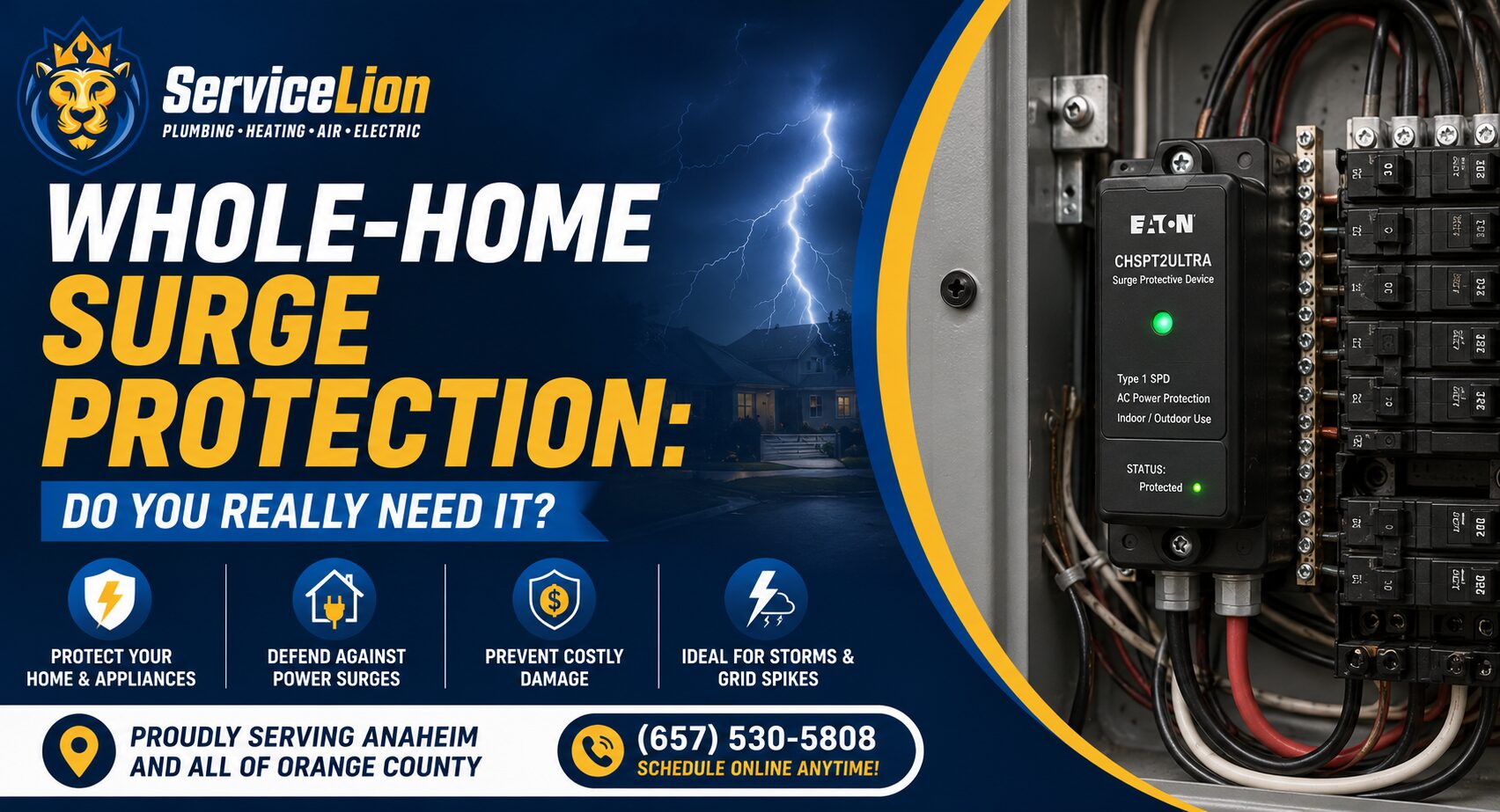
A whole-home surge protector (also called a service entrance surge protector or Type 1 surge device) installs directly at your electrical panel. It monitors voltage coming into your home and, when it detects a spike, diverts the excess energy to ground before it can reach your appliances and devices.
This is fundamentally different from a power strip surge protector, which:
- Only protects devices plugged directly into it
- Has a limited surge capacity that depletes over time
- Offers zero protection for hardwired appliances
A panel-mounted whole-home device protects everything connected to your electricalsystem — simultaneously and automatically.
What’s Actually at Risk Without One
Modern homes contain far more electronics than they did 20 years ago. Think about what’s now computerized in a typical Anaheim home:
- HVAC systems with digital control boards
- Smart thermostats
- Refrigerators with electronic displays and compressors
- Washing machines and dryers
- Dishwashers
- Electric water heaters and tankless units
- EV chargers
- Home security systems
- Smart lighting and outlets
A significant power surge — from a nearby lightning strike, a utility fault, or even a transformer issue on your street — can damage or destroy multiple appliances at once. HVAC control boards alone can cost $400–$800 to replace, and that’s just one component.
Is It Worth the Cost?
Whole-home surge protectors typically run $300–$700 installed by a licensed electrician — depending on your panel configuration and the device selected. That’s a one-time cost.
Compare that against replacing an HVAC control board, a refrigerator compressor, a dishwasher, and a smart thermostat after a single surge event, and the math isn’t complicated.
For Anaheim homeowners who have already invested in a heat pump, an EV charger, or smart home systems, the protection is even more valuable. These are expensive devices with sophisticated electronics that surges hit hard.
What to Look For in a Whole-Home Surge Protector
Not all devices are equal. When having one installed, ask your electrician about:
- Joule rating — higher is better; look for 40,000+ joules for a whole-home device
- UL listing — should meet UL 1449 standards
- Clamping voltage — lower clamping voltage means the device responds at a lower threshold
- Indicator light — lets you know the device is still functioning properly
- Warranty — some manufacturers offer connected equipment warranties
A licensed electrician can recommend the right device for your panel and ensure it’s installed correctly. This isn’t a DIY project — improper installation can create its own hazards.
Whole-home surge protection is one of those upgrades that costs relatively little compared to what it protects. If your home has a modern HVAC system, smart appliances, or an EV charger — or if you’re in an area that sees summer electrical storms — it’s a practical, one-time investment that most homeowners don’t think about until after something expensive gets fried.
The electricians at Service Lion Plumbing Heating Air Electric install whole-home surge protectors throughout Anaheim and Orange County. If you’d like to find out what’s right for your home’s panel, give us a call at (657) 530-5808 or schedule online.
FAQ
Does a whole-home surge protector replace individual surge strips?
Not entirely. The best approach is a layered one — a whole-home device at the panel plus point-of-use surge strips for your most sensitive electronics (computers, TVs, home theater equipment). Together they provide more complete protection.
Can a whole-home surge protector stop a direct lightning strike?
No device can fully protect against a direct strike — the energy involved is enormous. But a whole-home protector significantly reduces damage from nearby strikes and utility surges, which are far more common.
How long does a whole-home surge protector last?
Most devices last 5–10 years, though this depends on how many surges they absorb. Many have indicator lights that show when the device has reached its limit and needs replacement.
Will a surge protector help lower my insurance premiums?
Some insurers offer discounts for homes with surge protection installed. It’s worth asking your provider.
Does my electrical panel need to be upgraded to install one?
Not necessarily. In most cases, a whole-home surge protector can be added to your existing panel. Your electrician will confirm during the assessment.