

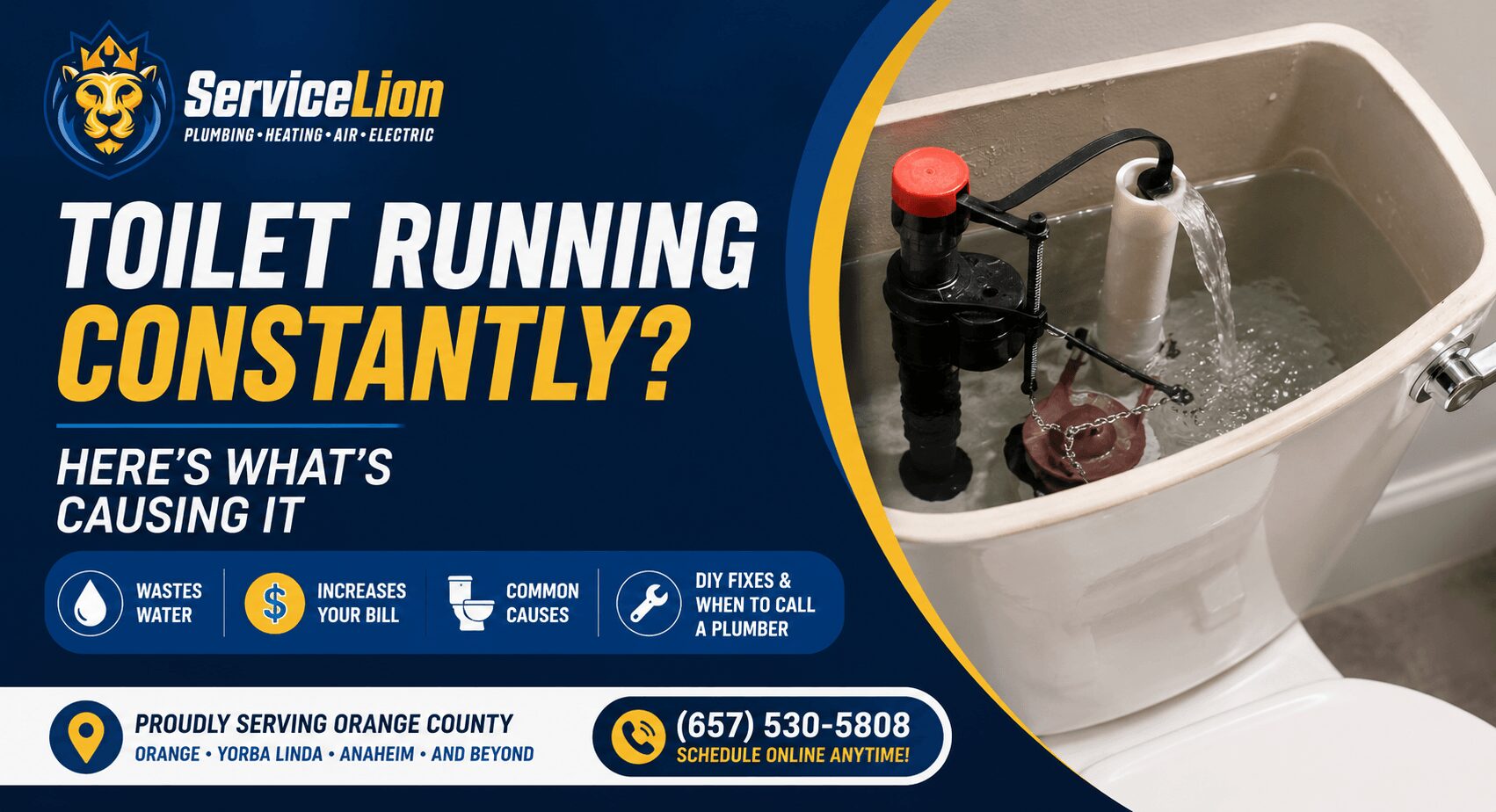
That sound. You know the one — a faint, never-ending hiss or gurgle coming from the bathroom even when nobody’s used it in hours. A running toilet is one of those problems homeowners in Orange tend to put off because it doesn’t seem urgent. No water on the floor, no burst pipe, no visible mess.
But a toilet that runs nonstop can quietly waste hundreds of gallons of water a month — and that shows up on your bill whether you fix it or not.
The good news? Most running toilets come down to one of a handful of causes. Here’s how to figure out which one you’re dealing with.
How to Tell If Your Toilet Is Actually Running
Before anything else, confirm the toilet is losing water. Drop a few drops of food coloring into the tank (not the bowl) and wait 15 minutes without flushing. If color shows up in the bowl, water is leaking through — and your toilet is running even when you can’t hear it clearly.
This simple test rules out normal refill sounds after flushing, which can sometimes get confused with a chronic leak.
The Most Common Causes of a Running Toilet
A Worn-Out Flapper
The flapper is a rubber seal at the bottom of your tank. It lifts when you flush and drops back down to stop water from flowing into the bowl. Over time, rubber degrades — it warps, hardens, or gets coated with mineral buildup from Orange County’s hard water.
When the flapper doesn’t seat properly, water trickles from the tank into the bowl continuously. Your fill valve kicks on to compensate, and the cycle never stops.
Replacing a flapper is one of the easier DIY fixes — most hardware stores carry universal flappers for a few dollars. The tricky part is matching the right size and shape to your toilet model.
A Faulty Fill Valve
The fill valve controls how much water enters the tank after a flush. When it starts to fail, it may not shut off completely once the tank is full — leaving water running until it spills into the overflow tube.
Signs of a fill valve problem include a toilet that runs at a consistent trickle, or water that sounds like it’s constantly refilling even though you haven’t flushed recently.
The Float Is Set Too High
The float is the device that tells the fill valve when to stop adding water. If it’s adjusted too high, the water level rises above the overflow tube and drains continuously — a problem you’ll usually notice as a subtle, steady sound even after the tank is full.
Adjusting the float is often as simple as bending the float arm or turning an adjustment screw, depending on your toilet model.
A Damaged Overflow Tube
The overflow tube is the tall vertical tube in the center of your tank. It’s designed as a safety drain — if the water level ever gets too high, it routes water into the bowl rather than onto your floor.
If the tube is cracked, too short, or the water level is sitting right at the top, your toilet may run intermittently in a way that’s easy to miss. This is less common than a flapper issue but worth checking.
Mineral Buildup from Hard Water
Orange County’s water supply carries high levels of calcium and magnesium. Over time, those minerals deposit on flappers, valves, and the fill valve seat — interfering with how they seal and function. A toilet that worked fine for years may develop a slow run simply because mineral scale has built up on the wrong surface.
This is one reason running toilets tend to be more common in older homes or in homes that don’t have a water softener.
What a Homeowner Can Do
If you’re comfortable working around the inside of your toilet tank, you can:
- Replace the flapper (a common and inexpensive DIY fix)
- Adjust the float height
- Clean visible mineral deposits with white vinegar
What you should leave to a plumber: anything involving the fill valve, overflow tube replacement, or a toilet that still runs after you’ve replaced the flapper. If the issue keeps coming back, there may be a problem deeper in the supply line or with the toilet itself.
When Is It Time to Call a Plumber?
Call a professional if:
- The toilet runs continuously and you’ve already replaced the flapper
- You notice your water bill climbing without an obvious explanation
- The toilet makes a “phantom flush” sound — refilling on its own without being used
- You find water on the floor near the base of the toilet
- The problem keeps returning after DIY repairs
A plumber can diagnose the issue quickly, replace worn components properly, and check whether the toilet itself is reaching the end of its useful life.
A constantly running toilet is one of those problems that’s easy to ignore but expensive to leave alone. Most of the time it comes down to a worn flapper, a misadjusted float, or a fill valve that’s seen better days. Some of those fixes are DIY-friendly. Others are worth a quick call to a licensed plumber.
Call to Action:
If your toilet has been running for more than a day or two — or your water bill has crept up without explanation — the team at Service Lion Plumbing Heating Air Electric can take a look. We serve Orange, Yorba Linda, Anaheim, and communities throughout Orange County. Give us a call at (657) 530-5808 or schedule online anytime.