

Most homeowners are familiar with drain snaking — that long metal cable that breaks through clogs and gets the water flowing again. It works fine for a lot of situations. But there are times when snaking a drain is like pushing a stick through mud: you punch a hole through the clog, clear enough space to get things moving, and the problem comes back in a few weeks.
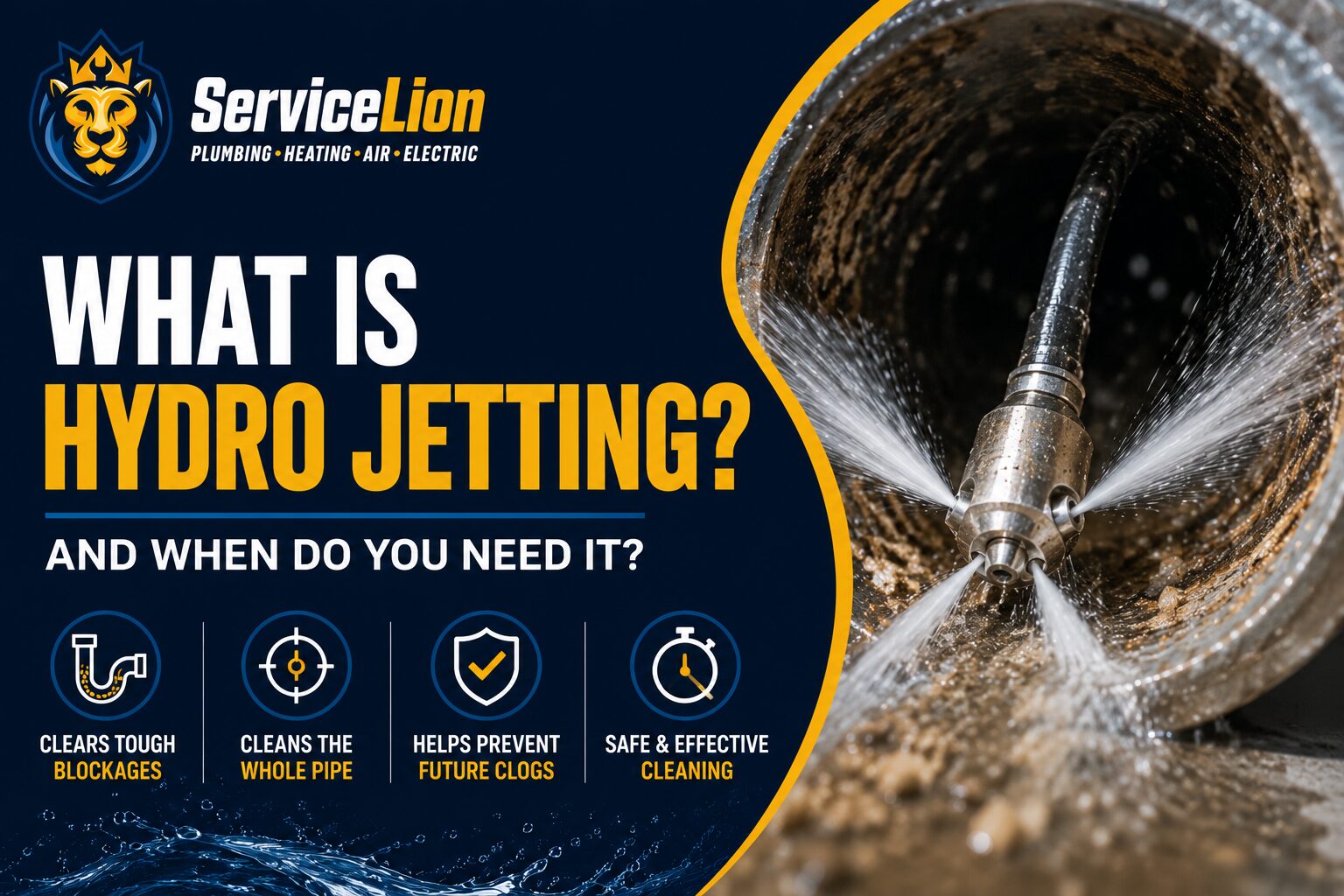
Hydro jetting is a different approach. Instead of poking through a blockage, it blasts the entire interior of the pipe clean using highly pressurized water. For the right situations, it’s significantly more effective and longer-lasting than traditional snaking.
Here’s how it works and how to know when it’s the right tool for your drain problem.
How Hydro Jetting Works
A hydro jetting machine pumps water through a specialized hose and nozzle at pressures typically ranging from 3,000 to 4,000 PSI — sometimes higher for commercial applications. The nozzle is inserted into the drain or cleanout and pulled back slowly through the pipe.
The high-pressure water doesn’t just push clogs forward — it cuts through them and scours the entire interior wall of the pipe as it moves. Grease, soap scum, mineral scale, hair, paper buildup, and even tree root intrusions can be removed from the pipe walls rather than just displaced further down the line.
A camera inspection is usually performed before hydro jetting to assess the condition of the pipe and confirm there are no cracks, collapses, or sections too fragile to handle high-pressure water.
Hydro Jetting vs. Drain Snaking
Both are legitimate tools, but they work differently and suit different situations.
Snaking is better for:
- Simple blockages — hair clogs at a bathroom drain, a grease plug in a kitchen line
- Quick response when a drain needs to be cleared fast
- Pipes that are older or potentially fragile (a camera inspection helps determine this)
Hydro jetting is better for:
- Recurring clogs that keep coming back after snaking
- Heavy grease buildup in kitchen drains (common in homes where cooking fats go down the drain)
- Mineral scale buildup narrowing pipe diameter
- Tree root infiltration in sewer lines (clears debris and roots, though severely damaged pipes may need repair)
- Whole-house drain maintenance before selling a home or after a long period of deferred maintenance
Signs You May Need Hydro Jetting
The same drain keeps clogging. If you’ve had a drain snaked multiple times and the clog returns within weeks or months, there’s buildup on the pipe walls that snaking isn’t removing.
Multiple drains are slow at the same time. When several drains throughout the house are sluggish, the problem is likely in the main sewer line rather than individual branch lines. Hydro jetting the main line clears the whole system at once.
You notice sewage odors. Heavy buildup in drain lines — particularly grease and organic material — produces odor even when drains aren’t clogged yet.
You have older pipes with years of buildup. In Brea homes with older cast iron or clay sewer lines, decades of use can leave a significant layer of scale and buildup narrowing the effective diameter of the pipe.
Tree roots have found their way in. Tree roots infiltrate sewer lines through joints and small cracks. Hydro jetting can clear root masses that have accumulated inside the line, though if the root entry point isn’t addressed, they’ll return.
What to Expect During a Hydro Jetting Service
A technician will typically start with a camera inspection to see the interior condition of your pipes before pressurizing them. Once it’s confirmed the pipes can handle the process, the jetting hose is fed through a cleanout access point and the equipment is run through the affected lines.
For a main sewer line, the process might take 1–2 hours depending on pipe length and condition. Afterward, a follow-up camera inspection confirms the line is clear.
The result is a pipe that’s as close to original interior diameter as possible — not just a hole poked through a clog.
Hydro jetting isn’t the right tool for every drain problem — but for drains that keep coming back, sewer lines with heavy buildup, or whole-system maintenance, it’s significantly more effective than traditional snaking. The key is having a plumber who knows when to recommend it based on what they can actually see inside your pipes.
If you’re dealing with drains that keep clogging or want a thorough sewer line cleaning, the team at Service Lion Plumbing Heating Air Electric can assess your lines and recommend the right approach. We serve Brea and all of Orange County. Call (657) 530-5808 or book online.
FAQ
Is hydro jetting safe for all pipes?
Not necessarily. Very old or deteriorated pipes — particularly clay or cast iron in poor condition — can be damaged by high-pressure water. A camera inspection beforehand identifies any sections of concern. A good plumber won’t hydro jet without checking the pipe condition first.
How long does hydro jetting last compared to snaking?
There’s no fixed answer, as it depends on what caused the buildup. But because hydro jetting removes buildup from the pipe walls rather than just breaking through a clog, results typically last significantly longer before the problem recurs.
Can hydro jetting remove tree roots?
It can clear tree root masses that have grown inside the pipe, but it doesn’t repair the entry point where the roots got in. If root infiltration is a recurring issue, the affected section of pipe may need to be repaired or replaced.
How much does hydro jetting cost in Orange County?
Costs vary based on pipe length, access, and how extensive the work is — but a single-line hydro jet service typically runs in the $300–$600 range. A full main sewer line cleaning may cost more. A camera inspection is usually additional if not included.
Can I just use a drain cleaning product instead?
Chemical drain cleaners work on minor organic clogs but do nothing for grease buildup, mineral scale, or root infiltration. They can also damage certain pipe materials with repeated use.