

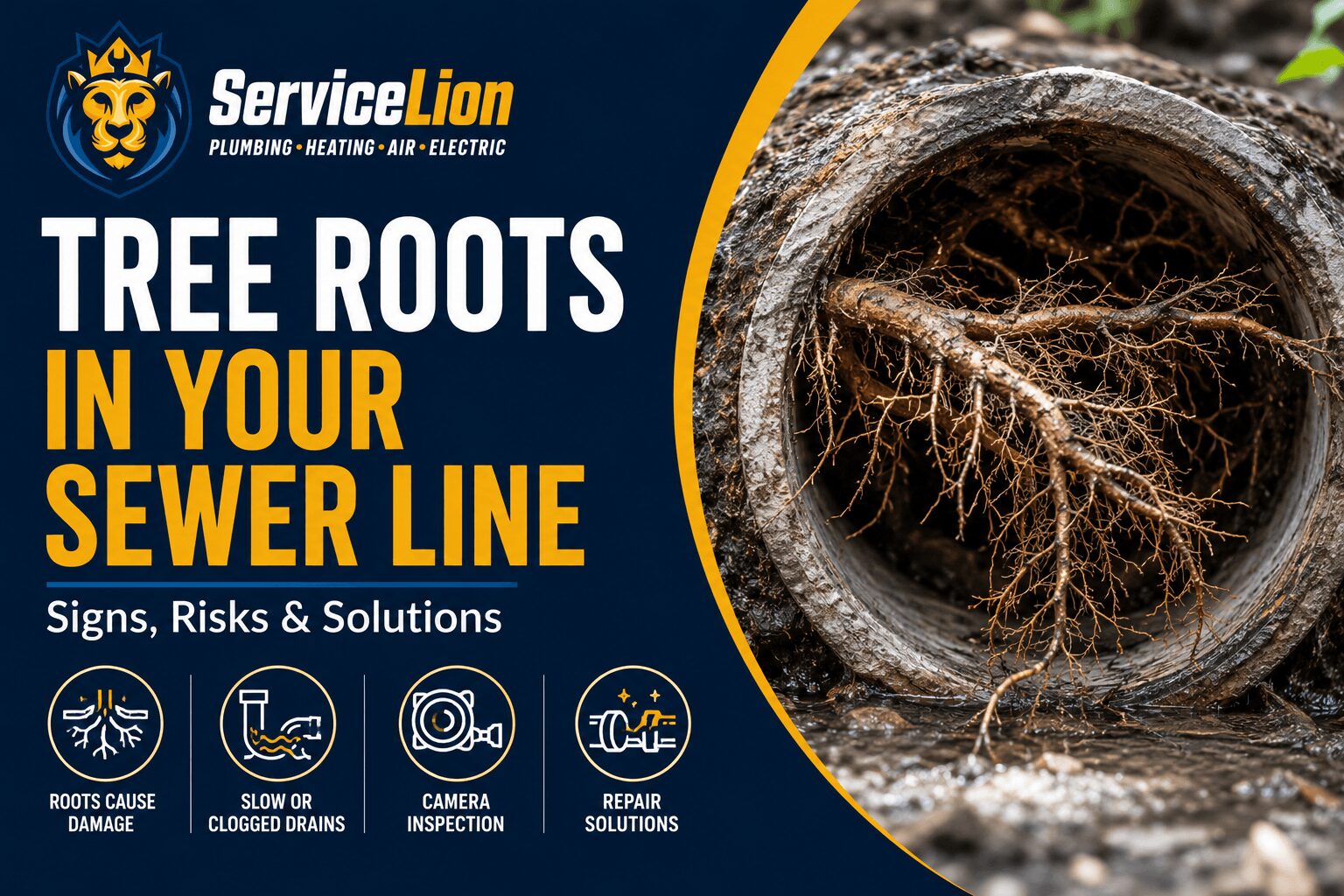
The mature trees lining Costa Mesa’s residential streets and filling backyard landscapes are one of the things that makes older neighborhoods feel established and shaded. They’re also one of the most common causes of serious sewer line damage in the city.
Tree roots naturally seek out water and nutrients. Your sewer line — which carries warm, moist air and is full of exactly what roots are looking for — can be an irresistible target. A small crack at a pipe joint is all a root needs to get started. Once inside, roots don’t stay small.
Here’s how to recognize the signs early, understand what you’re dealing with, and know what your options are.
Why Tree Roots Target Sewer Lines
Sewer pipes run underground between your home and the street, typically at a depth of 2–6 feet. They’re joined in sections — and over decades, those joints shift, crack slightly, or develop small gaps as the ground around them moves and settles.
Tree roots detect the moisture and vapor escaping from those gaps and grow toward it. Fine feeder roots enter through the smallest openings and, once inside the pipe, they find an environment where they can grow aggressively. As roots thicken and expand, they cause the pipe to crack further, create blockages that catch debris, and can eventually collapse the line entirely.
Older neighborhoods in Costa Mesa with large, established trees and older clay or cast iron sewer pipes are particularly susceptible. The combination of aging infrastructure and mature root systems creates ideal conditions.
Signs of Tree Root Infiltration
Slow or Gurgling Drains Throughout the House
When roots have grown enough to partially obstruct the main sewer line, wastewater doesn’t drain as freely. Multiple drains slowing down at the same time — especially toilets, showers, and floor drains — points to a main line issue rather than individual clogs.
Gurgling sounds from drains or toilets when they’re not in use suggest air is being pushed back through the system due to a partial blockage.
Recurring Clogs
If you’ve had the same drain cleared multiple times in the past year and the clog keeps returning, the underlying cause — such as a root mass trapping debris — hasn’t been addressed.
Toilet Behavior Changes
A toilet that’s slow to flush, gurgles after flushing, or backs up when you run a nearby shower may be responding to a main line obstruction.
Sewage Odors Near Drains
Roots trapping waste inside the pipe create persistent odors that back up through drain openings even when the drain is flowing.
Sinkholes or Unusually Green Patches in the Yard
Sewage leaking from a cracked pipe fertilizes the soil above it — so an unexpectedly lush or green patch of lawn (particularly in a line between the house and the street) can indicate a leak below. A soft or sunken area in the yard is a more urgent sign that a pipe has collapsed.
How Root Infiltration Is Diagnosed
The only reliable way to confirm root infiltration — and understand how severe it is — is a sewer camera inspection. A small camera is fed through a cleanout access point and travels through the pipe, giving a real-time view of the interior.
This tells the plumber exactly where roots have entered, how much growth is present, whether there’s any pipe damage, and what the best repair approach is. Camera inspections are strongly recommended before committing to any repair — you want to know what you’re dealing with, not guess.
What Can Be Done About It
Rooter service / mechanical cutting — A rotating cutting tool is run through the pipe to break up and remove root mass. This clears the blockage and restores flow, but doesn’t address the entry point. Roots typically return within 1–3 years if the pipe crack or joint gap isn’t repaired.
Hydro jetting — High-pressure water clears root debris and flushes the pipe clean. Often used in combination with mechanical cutting for heavier infiltration.
Trenchless pipe lining — A flexible liner is inserted into the existing pipe and cured in place, effectively creating a new pipe inside the old one. This seals the cracks and gaps where roots were entering, addressing the root cause (no pun intended) without excavating your yard.
Pipe bursting — A new pipe is pulled through the old one, breaking the old pipe outward as it goes. Another trenchless option for pipes that are too deteriorated to line.
Traditional excavation and replacement — When the pipe is severely collapsed or the damage is extensive, open-cut excavation and replacement may be necessary.
Tree roots in your sewer line are a problem that tends to get quietly worse until it becomes a plumbing emergency. The earlier it’s caught — ideally with a camera inspection before the signs become severe — the more repair options you have and the less it costs.
Service Lion Plumbing Heating Air Electric offers sewer camera inspections and full sewer line repair throughout Costa Mesa and Orange County. If your drains are slow, gurgling, or backing up, call (657) 530-5808 — or schedule online and let us take a look.
FAQ
How fast do tree roots grow inside a sewer pipe?
Growth rate depends on the tree species, the season, and how much water and nutrients are available inside the pipe. Some homeowners see significant root regrowth within a year of clearing; others go several years between issues.
Which trees are most likely to damage sewer lines?
Trees with aggressive, water-seeking root systems — ficus, willow, certain types of poplar, and large eucalyptus — are among the most common offenders. But almost any tree close enough to a sewer line can eventually cause problems.
Can I use root-killing chemicals instead of calling a plumber?
Copper sulfate or foaming root killers are sometimes used as preventive maintenance to slow root regrowth. They don’t remove existing root masses, and they don’t repair cracked pipes. They work best as a supplemental measure after professional clearing.
How do I know if my sewer line is clay or cast iron?
A camera inspection will reveal the pipe material. Homes built before 1970 in Costa Mesa often have clay sewer laterals, which are more brittle and prone to cracking than modern PVC.
Is trenchless repair as durable as traditional replacement?
Quality trenchless pipe lining systems are designed to last 50 years or more. They’re a proven technology and often the preferred option because they avoid extensive yard excavation.