

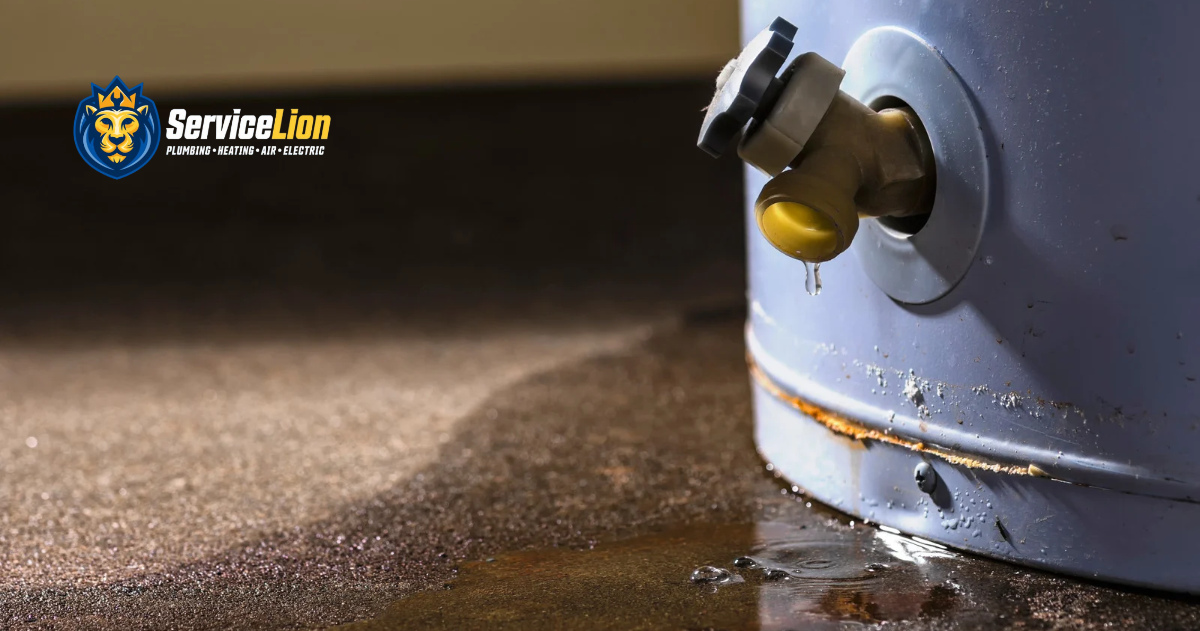
Finding water around your water heater is never something you want to see.
Maybe it’s only a small puddle. Maybe you dry it up and notice it again the next morning. Or maybe water is actively spreading across the garage or utility room floor.
Whatever the situation, a water heater leaking from the bottom deserves attention. Some leaks come from relatively repairable components, while others can indicate that the tank itself is beginning to fail.
For Yorba Linda homeowners, knowing where the water is coming from can help you understand how urgent the problem may be.
First, Make Sure the Water Heater Is Actually Leaking
Water around the bottom of a water heater doesn’t always mean the tank itself has failed.
Water can travel down the side of the unit from a connection higher up and collect underneath, making it appear that the bottom is leaking.
Possible sources include:
- Hot or cold water connections
- Temperature and pressure relief valve
- Drain valve
- Nearby plumbing
- Condensation
- The water heater tank itself
Before assuming you need a replacement, the actual source of the water should be identified.
The Drain Valve Could Be Leaking
Near the bottom of a traditional tank water heater is a drain valve used when the tank needs to be flushed or emptied.
Over time, the valve can loosen, deteriorate, or fail to seal completely.
If water is collecting directly beneath the drain valve, this may be the source.
A leaking drain valve can often be repaired or replaced without replacing the entire water heater, depending on the condition of the unit.
However, don’t repeatedly tighten or force an old valve. A damaged valve can worsen the leak.
The Tank Itself May Be Corroding
One of the more serious causes of water leaking from the bottom is internal tank corrosion.
Traditional tank water heaters are constantly holding water. Although they’re designed to resist corrosion, the interior doesn’t last forever.
An anode rod inside the tank helps protect it by attracting corrosive elements. Eventually, however, the rod can become depleted and corrosion may begin attacking the tank itself.
Once the tank develops a crack or starts leaking because of internal corrosion, it generally isn’t something that can simply be patched.
In that situation, replacement is usually the appropriate solution.
Sediment Buildup Can Put Stress on an Older Water Heater
Minerals naturally present in the water can settle at the bottom of a water heater tank over time.
This sediment layer can reduce efficiency and contribute to other problems, particularly if the tank hasn’t been flushed regularly.
You may also notice:
- Popping or rumbling noises
- Reduced hot water
- Longer heating times
- Fluctuating water temperature
Sediment doesn’t automatically mean the tank will leak, but years of buildup combined with corrosion and age can contribute to deterioration.
The Temperature and Pressure Relief Valve Could Be the Source
Your water heater has a temperature and pressure relief valve, often called a T&P valve, designed to release pressure if conditions inside the tank become unsafe.
If the valve releases water, that water travels through a discharge pipe that may terminate near the bottom of the heater.
This can make it look like the bottom of the tank is leaking.
A T&P valve that repeatedly releases water shouldn’t simply be ignored or plugged. It could indicate a problem with the valve, excessive pressure, or another issue that needs professional evaluation.
Could It Just Be Condensation?
Sometimes, yes.
Under certain conditions, condensation can form on the tank or nearby pipes and drip toward the floor.
A small amount of occasional moisture may be condensation rather than an actual plumbing leak.
But if you’re repeatedly finding puddles or the amount of water is increasing, don’t assume condensation is responsible.
Signs the Leak May Be More Serious
Pay closer attention if you notice:
- Water continuously pooling underneath the tank
- Rust or corrosion around the bottom
- Water coming directly through the tank body
- Increasing amounts of water each day
- Rust-colored hot water
- Rumbling or popping noises
- An older water heater with a new leak
A leaking tank can worsen unexpectedly, potentially releasing a significant amount of water into the surrounding area.
What Should You Do If Your Water Heater Is Leaking?
If you discover water around your water heater, don’t simply wipe it up and wait to see what happens.
Start by avoiding contact with electrical components or hot water.
If the leak is significant or actively spreading, shutting off the water supply to the unit can help limit additional water damage. Depending on whether you have a gas or electric water heater, safely shutting down the equipment may involve different steps.
If you’re unsure how to do this safely, contact a professional.
Then clean up standing water and have the source of the leak inspected.
Repair or Replace?
The answer depends on what’s leaking.
A drain valve, connection, or other replaceable component may only require repair.
A corroded or cracked tank is different. Once the tank itself begins leaking, replacing the water heater is generally more practical than attempting to repair the tank.
The age and overall condition of the water heater also matter. If an older unit is already experiencing multiple problems, investing in another repair may not make as much sense as replacement.
A professional inspection can help determine which situation you’re dealing with.
Don’t Wait for a Small Water Heater Leak to Become a Big One
A few drops underneath your water heater may seem manageable today, but water leaks rarely improve on their own.
The source could be something relatively straightforward, such as a drain valve or connection. But it could also be an early warning that the tank itself is deteriorating.
Finding out which one you’re dealing with can help prevent unexpected water damage and loss of hot water.
Service Lion Plumbing Heating Air Electric provides water heater inspections, repairs, and replacements throughout Yorba Linda and Orange County. If your water heater is leaking from the bottom, call (657) 530-5808 or schedule online to have the problem inspected.
FAQ
Is a water heater leaking from the bottom dangerous?
It depends on the source. A minor valve leak may be repairable, while a leaking tank can worsen and potentially release a large amount of water. Leaks near electrical or gas components also require additional caution.
Can a leaking water heater be repaired?
Some leaks can. Problems involving connections, valves, or certain components may be repairable. If the tank itself has corroded and started leaking, replacement is generally necessary.
Why is there a small puddle under my water heater?
Possible causes include a leaking drain valve, water traveling down from a connection above, the T&P valve releasing water, condensation, or a leak in the tank itself.
Should I turn off my water heater if it’s leaking?
If the leak is significant, shutting down the water supply and water heater can help prevent additional damage. Because procedures differ between gas and electric units, don’t attempt anything you’re unsure how to do safely.
When should I call for water heater repair in Yorba Linda?
Call a plumber when water repeatedly appears around the unit, the leak is increasing, you see corrosion, the tank appears to be leaking directly, or you’re unable to identify the source.