

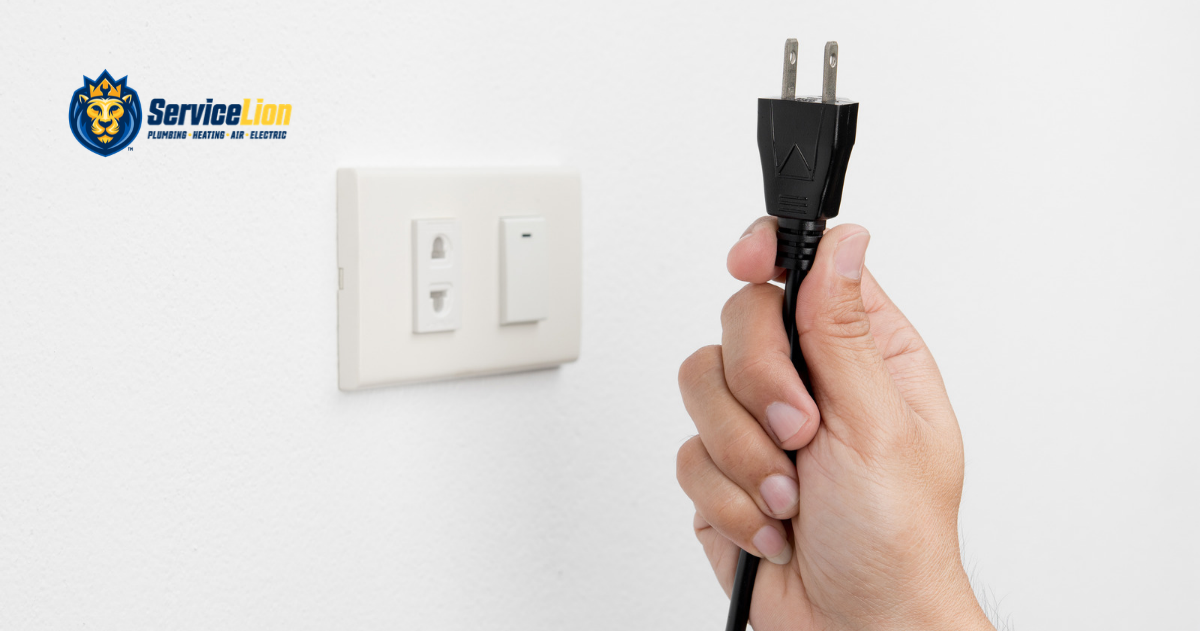
You plug in a phone charger, lamp, or appliance and see a quick flash of light inside the outlet.
Was that normal—or is something wrong with your electrical system?
A tiny, split-second spark can sometimes occur when a device begins drawing electricity as it’s connected. But an outlet that sparks frequently, produces large sparks, makes noise, smells burnt, or shows discoloration shouldn’t be ignored.
For Newport Beach homeowners, knowing the difference between a brief electrical arc and the warning signs of a faulty outlet can help you determine when it’s time to stop using the outlet and call an electrician.
Why Can an Outlet Spark When You Plug Something In?
Electricity begins flowing to a device as soon as the metal prongs of the plug make contact with the energized components inside the outlet.
During that brief moment, electricity can jump across the small gap between the plug and the outlet contacts, creating a tiny spark.
This is more likely when you’re plugging in something that immediately draws power.
A very small blue spark that happens occasionally and disappears instantly isn’t necessarily a sign that the outlet is failing.
The situation becomes more concerning when the spark is large, happens repeatedly, lasts longer than a moment, or comes with other electrical symptoms.
Loose Connections Can Cause Sparking
Electrical outlets contain connections that need to remain secure.
Over time, wiring connections can loosen or outlet components can wear.
A loose connection can cause electricity to arc across a gap rather than flow through a solid connection.
You may notice:
- Frequent sparking
- Flickering lights nearby
- Crackling or buzzing sounds
- Intermittent power
- An outlet that feels loose
- Heat around the outlet
Loose electrical connections can generate heat, making them something you shouldn’t ignore.
The Outlet May Be Worn Out
Electrical outlets don’t last forever.
After years of plugging and unplugging devices, the internal contacts that grip the plug can wear down.
One obvious sign is a plug that no longer fits securely.
If a charger or appliance plug easily falls out or feels unusually loose, the outlet may no longer be making a reliable electrical connection.
That loose contact can contribute to arcing, heat, and sparking.
Replacing a worn outlet can restore a secure connection and eliminate the underlying problem.
Damaged Wiring Could Be Behind the Outlet
Sometimes the visible outlet isn’t the actual source of the problem.
The wiring behind it may be:
- Loose
- Damaged
- Deteriorated
- Improperly connected
- Overheated
If the outlet repeatedly sparks even after trying different devices, the electrical connection behind the receptacle may need to be inspected.
Don’t remove the outlet cover or pull the receptacle from the wall unless you’re trained to work safely with residential electrical systems.
Moisture and Electricity Don’t Mix
Outlets near kitchens, bathrooms, garages, patios, and other areas exposed to moisture deserve particular attention.
Water entering an outlet can create electrical hazards, corrosion, and unexpected electrical behavior.
Outlets in certain locations are typically protected by GFCI devices, which are designed to shut off power when they detect certain electrical imbalances.
If an outlet has gotten wet, is visibly damaged, or repeatedly trips a GFCI, don’t continue using it until the cause is identified.
The Device You’re Plugging In Could Be the Problem
Before assuming the outlet is faulty, consider what you’re connecting to it.
A damaged plug, frayed power cord, or failing appliance can also create sparking.
Inspect the device for:
- Bent or damaged plug prongs
- Frayed cords
- Exposed wiring
- Melted plastic
- Burn marks
- Unusual electrical smells
If the sparking only happens with one particular device but other devices work normally in the same outlet, the appliance or cord may be responsible.
Stop using damaged electrical equipment until it has been repaired or replaced.
When Is an Outlet Spark Dangerous?
Pay attention to what the spark looks and sounds like.
Warning signs include:
- Large or bright sparks
- Sparks that continue after the plug is inserted
- Yellow or orange flashes
- Smoke
- Burning odors
- Buzzing or crackling
- Black or brown discoloration
- Melted plastic
- An outlet that’s hot to the touch
- A breaker that trips when the outlet is used
These symptoms can indicate arcing, overheating, damaged wiring, or another electrical problem.
Stop using the affected outlet and have it inspected.
What If the Outlet Is Warm?
An outlet shouldn’t become noticeably hot during normal use.
Some devices and charging equipment may produce warmth themselves, but heat coming from the receptacle or wall plate deserves attention.
Possible causes include loose connections, excessive electrical load, damaged components, or deteriorating wiring.
If the outlet feels hot, unplug the device if it’s safe to do so and stop using the outlet until an electrician can inspect it.
Don’t Keep Testing a Sparking Outlet
If an outlet produces an unusual spark, repeatedly plugging devices into it to see whether it happens again isn’t a good troubleshooting method.
Electrical arcing can generate significant heat.
Instead, pay attention to what happened:
- How large was the spark?
- What color was it?
- Did you hear buzzing or crackling?
- Did the breaker trip?
- Was there a burning smell?
- Does the plug fit loosely?
- Is there visible discoloration?
Those details can help an electrician diagnose the problem.
When Should You Call an Electrician?
Schedule an electrical inspection if:
- The outlet sparks frequently.
- Sparks are large or unusually bright.
- The outlet makes buzzing or crackling sounds.
- You smell burning.
- The outlet feels hot.
- The plug doesn’t stay securely connected.
- You see scorch marks or melted plastic.
- The breaker trips when the outlet is used.
- The outlet has been exposed to moisture.
If you see smoke, active burning, or another immediate electrical hazard, stop using the affected circuit and treat the situation as an electrical emergency.
Don’t Ignore a Sparking Electrical Outlet
A tiny, momentary spark isn’t always evidence of a serious problem.
But repeated or aggressive sparking is different.
A sparking electrical outlet may be caused by worn internal contacts, loose wiring, moisture, damaged equipment, or another electrical fault that needs attention.
Service Lion Plumbing Heating Air Electric provides electrical inspections, outlet repairs, and other residential electrical services throughout Newport Beach and Orange County. If an outlet keeps sparking when you plug something in, call (657) 530-5808 or schedule online to have one of our electricians inspect the problem.
FAQ
Is it normal for an outlet to spark when I plug something in?
A tiny, brief spark can sometimes occur as a device begins drawing electricity. Large, frequent, prolonged, or noisy sparks aren’t something to ignore.
Why does the same outlet spark every time I use it?
Repeated sparking may indicate worn outlet contacts, a loose electrical connection, damaged wiring, or another problem with the receptacle or circuit.
Should I stop using an outlet that sparks?
If the sparking is frequent, large, accompanied by noise or odor, or the outlet is warm or discolored, stop using it and have it inspected.
Can an old electrical outlet cause sparking?
Yes. Internal contacts can wear with age and repeated use, creating loose connections that may contribute to electrical arcing.
When should I call an electrician in Newport Beach?
Call an electrician if the outlet repeatedly sparks, feels hot, smells burnt, makes buzzing or crackling sounds, has visible damage, or causes the circuit breaker to trip.