

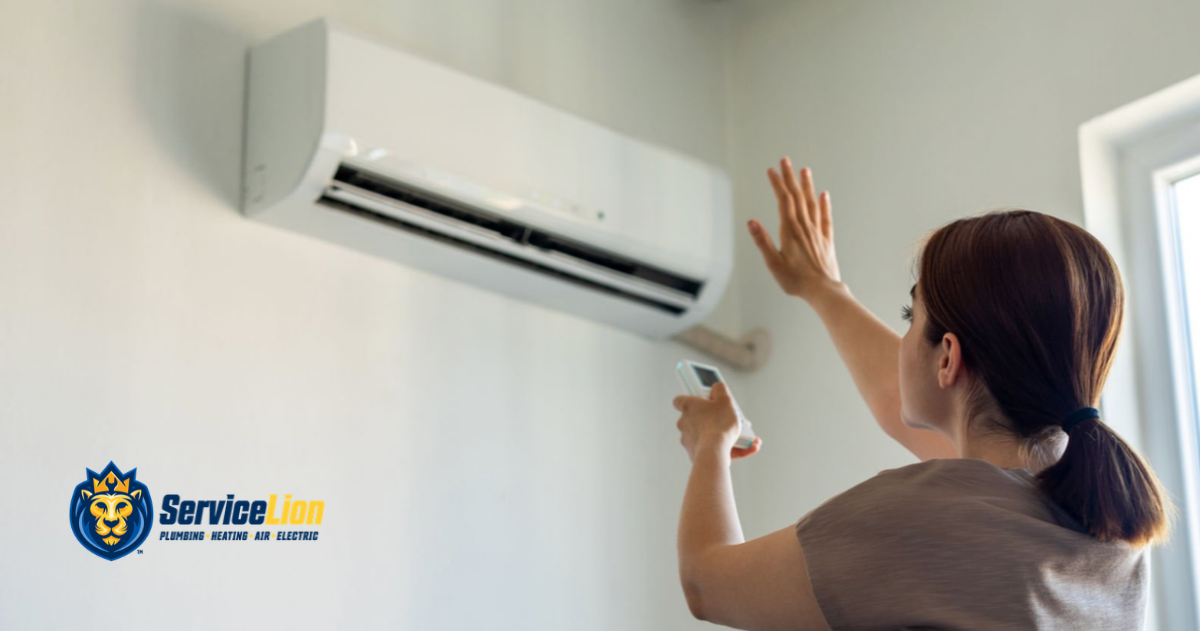
Your air conditioner was working normally, and then suddenly the air coming from the vents doesn’t feel cold anymore.
The system may still be running. You can hear the blower, and air is moving through the vents, but your Corona home keeps getting warmer.
When your AC suddenly starts blowing warm air, the problem can range from something as simple as an incorrect thermostat setting to a refrigerant, airflow, electrical, or outdoor-unit issue.
During the summer, when your AC is working its hardest, problems that have been developing quietly can become much more noticeable.
Here’s what could be causing your AC to stop cooling.
Check Your Thermostat First
Before assuming there’s a major AC problem, take a look at the thermostat.
Make sure it’s set to COOL and that the temperature setting is below the current indoor temperature.
Also check the fan setting.
If the fan is set to ON instead of AUTO, the blower may continue circulating air even when the AC isn’t actively cooling. During those periods, the air coming from the vents can feel warmer.
Switch the fan to AUTO and see whether normal cooling resumes.
If the settings are correct and the AC is still blowing warm air, there’s likely another issue.
Your Air Filter May Be Restricting Airflow
A dirty air filter can make it difficult for your HVAC system to move enough air.
As dust and debris accumulate on the filter, airflow through the system becomes increasingly restricted.
You may notice:
- Weak airflow from the vents
- Longer cooling cycles
- Uneven temperatures
- AC struggling to reach the thermostat setting
- Ice forming around the indoor system
Check the filter and replace it if it’s visibly dirty.
If your AC still isn’t cooling afterward, continue looking for another cause.
Check Whether the Outdoor Unit Is Running
Your indoor and outdoor AC equipment work together to cool your home.
The indoor blower can still circulate air even when the outdoor condenser isn’t operating correctly.
While the thermostat is calling for cooling, check the outdoor unit.
Normally, you should hear it running and see the condenser fan operating.
If the outdoor unit is completely silent—or you hear humming but the fan isn’t moving—there may be an electrical or mechanical problem preventing the system from cooling.
Don’t open the condenser cabinet or attempt to repair electrical components yourself.
A Tripped Breaker Could Be the Problem
If the outdoor unit isn’t running, check your electrical panel.
The indoor and outdoor portions of your HVAC system may use separate circuits. That means the indoor blower could continue operating even if the breaker supplying the outdoor unit has tripped.
If you find a tripped breaker, don’t repeatedly reset it.
A breaker that trips again may indicate an electrical problem or failing HVAC component that needs professional diagnosis.
Your Evaporator Coil Could Be Frozen
It may seem strange for an air conditioner to freeze during a hot Corona summer, but it can happen.
Your evaporator coil needs proper airflow to absorb heat from the air inside your home. When airflow becomes restricted or another cooling problem develops, condensation on the coil can freeze.
Once the coil becomes covered in ice, it can’t absorb heat effectively.
Signs of a frozen evaporator coil include:
- Ice on refrigerant lines
- Weak airflow
- Water around the indoor AC unit
- AC running without cooling the house
- Increasing indoor temperatures
If you see ice, turn off the cooling and allow the system to thaw.
Don’t try to chip or scrape the ice away. If the coil freezes again, the underlying cause needs to be diagnosed.
Low Refrigerant Can Affect Cooling
Your AC relies on refrigerant to absorb heat indoors and release it outside.
If refrigerant levels are too low because of a leak or another system problem, your air conditioner may struggle to cool your home.
You might also notice:
- Longer cooling cycles
- Ice forming on refrigerant lines
- AC running constantly
- Poor cooling throughout the house
- Cooling performance getting progressively worse
Refrigerant isn’t something an AC normally consumes during operation.
If the system is low on refrigerant, simply adding more without identifying why it’s low may only provide a temporary solution.
The Outdoor Condenser May Be Struggling to Release Heat
The outdoor unit releases the heat your AC removes from inside your home.
If airflow around the condenser is heavily restricted by leaves, dirt, grass clippings, or landscaping, the system may have difficulty releasing that heat efficiently.
Keep vegetation and debris away from the outdoor equipment so air can move freely around it.
If the condenser itself is heavily dirty or appears to need internal cleaning, professional AC maintenance may be appropriate.
An Electrical Component May Have Failed
Summer puts additional demand on your air conditioner.
When the system runs for long periods, worn electrical components may begin to fail.
Problems involving the capacitor, contactor, fan motor, compressor, wiring, or other components can prevent the outdoor equipment from operating correctly.
Possible warning signs include:
- Buzzing or humming
- AC struggling to start
- Outdoor fan not spinning
- Breaker repeatedly tripping
- Burning or electrical odors
- System shutting down unexpectedly
Electrical HVAC components shouldn’t be handled without proper training and equipment.
What Can You Safely Check Yourself?
Before scheduling AC repair, there are a few simple things you can check:
- Check the thermostat. Make sure it’s set to COOL and the fan is set to AUTO.
- Inspect the air filter. Replace it if it’s dirty.
- Check your vents. Make sure they’re open and aren’t blocked by furniture.
- Look at the outdoor unit. See whether it’s operating while the AC is calling for cooling.
- Check for visible ice. If you see ice, turn off the cooling.
- Check the electrical panel. Look for a tripped AC breaker, but don’t repeatedly reset it if it trips again.
If those basic checks don’t restore cooling, it’s time to have the system inspected.
When Should You Call for AC Repair?
Schedule professional AC service if:
- The system continues blowing warm air.
- The outdoor condenser isn’t running.
- The condenser hums but the fan doesn’t move.
- The breaker repeatedly trips.
- Ice forms on the indoor unit or refrigerant lines.
- Airflow has become noticeably weaker.
- The AC makes unusual electrical noises.
- Your home keeps getting warmer while the system runs.
If you notice a burning smell, sparks, smoke, or another electrical safety concern, shut the system off and have it inspected.
Don’t Wait for Your AC to Start Cooling Again on Its Own
When your AC suddenly stops cooling, repeatedly lowering the thermostat usually won’t solve the problem.
The cause could be a simple thermostat or filter issue, but it could also involve the evaporator coil, refrigerant system, outdoor condenser, or electrical components.
Finding the cause early can help restore cooling before your home becomes increasingly uncomfortable during a hot Corona day.
Service Lion Plumbing Heating Air Electric provides professional AC inspections and repairs throughout Corona. If your AC is blowing warm air or has stopped cooling, call (657) 530-5808 or schedule online to have one of our HVAC technicians inspect the system.
FAQ
Why is my AC running but blowing warm air?
Possible causes include incorrect thermostat settings, restricted airflow, a frozen evaporator coil, a problem with the outdoor condenser, a tripped breaker, or a refrigerant issue.
Can a dirty air filter cause my AC to blow warm air?
A severely clogged air filter can restrict airflow through the system and interfere with cooling. Restricted airflow can also contribute to evaporator coil freezing.
Why is my indoor AC running but the outdoor unit isn’t?
The indoor blower and outdoor condenser can operate on different circuits. A tripped breaker, electrical problem, or failed HVAC component may prevent the outdoor unit from running while the indoor blower continues circulating air.
Should I turn off my AC if it’s blowing warm air?
If you’ve checked the thermostat and filter and the system still isn’t cooling—especially if you see ice, hear unusual noises, smell burning, or notice the outdoor unit isn’t running normally—turning the cooling off until the system can be inspected may help prevent additional strain.
When should I call for AC repair in Corona?
Schedule AC repair if basic thermostat and filter checks don’t restore cooling, the outdoor unit isn’t operating, the system freezes, a breaker repeatedly trips, or your home continues getting warmer while the AC runs.