

A pipe bursts. A supply line under the sink fails. The washing machine hose lets go. In situations like these, every second that water flows freely into your home is more damage — to floors, walls, cabinetry, and whatever’s underneath.
The difference between a contained problem and a costly restoration project often comes down to one thing: how quickly you can stop the water.
Most homeowners in Corona have never had to do this, which means most don’t know exactly where their shutoff valves are or how to use them under pressure. Here’s everything you need to know — before you need it.
Your Home Has Three Levels of Shutoff
1. Individual Fixture Shutoffs
Every toilet, sink, dishwasher, washing machine, and water heater in your home should have its own shutoff valve. These are the small oval or straight handles located on the supply lines coming out of the wall or floor near each fixture.
For toilet leaks, a slow faucet drip turning into a spray, or a supply line failure under the sink, these are the fastest and easiest valves to reach. Turn them clockwise (righty-tighty) to close.
If a fixture shutoff won’t turn — which is common in older homes where valves haven’t been touched in years — don’t force it. Go to the next level.
2. Your Home’s Main Shutoff Valve
This valve controls all water flowing into your house. It’s typically located in one of these places:
- Near the water meter — often in a box buried in the front yard near the street or along the side of the house
- In the garage — on the wall where the main water line enters the house
- In a utility closet — some homes route the main line to an interior location
In Corona and most of Southern California, main shutoffs are commonly found in the front yard meter box or along the side of the garage wall. Take a few minutes this week to locate yours.
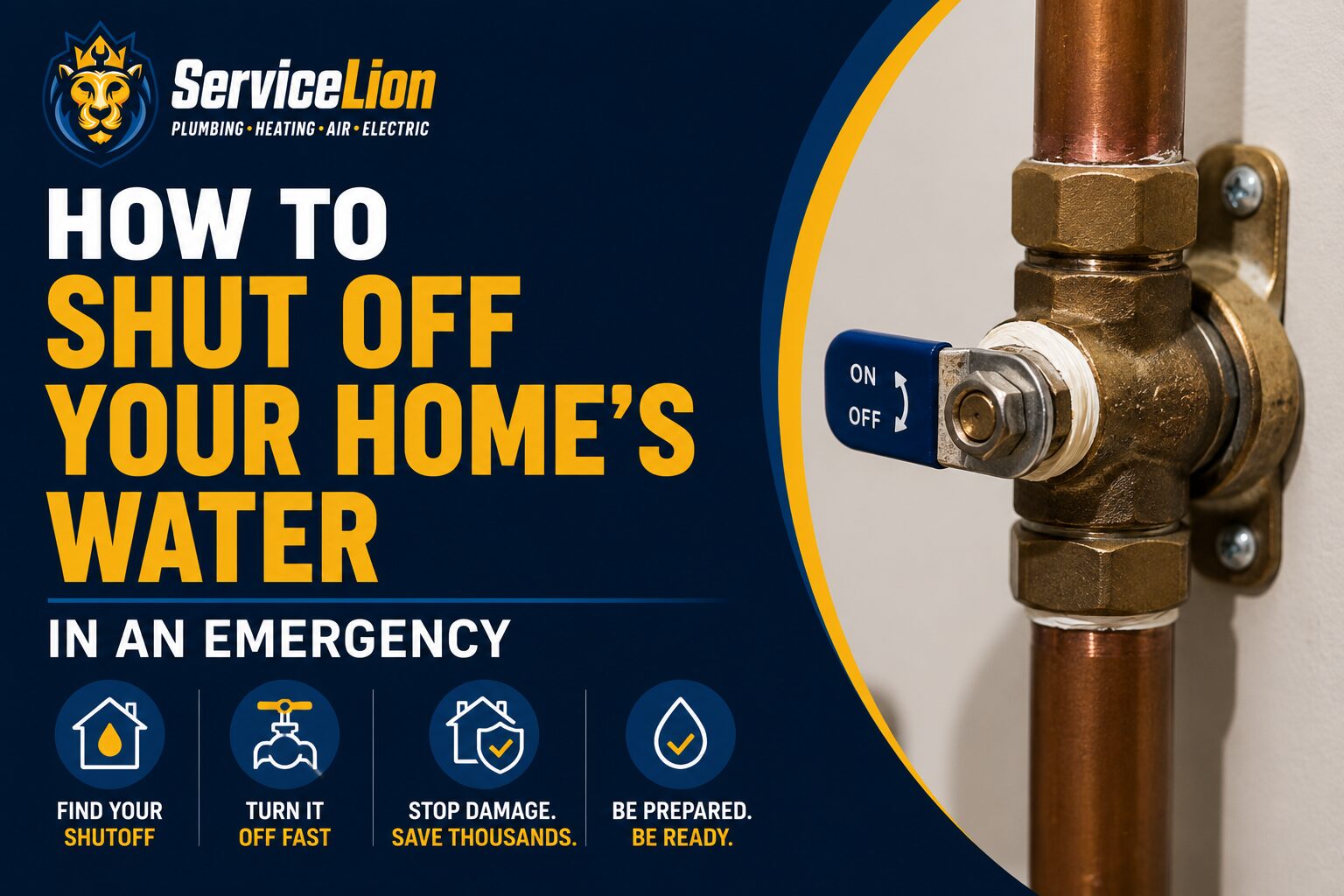
The valve itself is usually one of two types: a ball valve (with a lever handle) or a gate valve (with a round wheel handle). Ball valves turn 90 degrees to close; gate valves require multiple turns.
3. The Street Meter Shutoff
If your home’s main shutoff valve is broken, corroded, or inaccessible, the water can also be shut off at the street meter — the box in the sidewalk or parkway. This requires a special tool called a meter key or T-handle wrench, which you can purchase at a hardware store.
In most cases, the utility company in Corona can also shut off water at the meter if needed. But in a flooding emergency, waiting for them to arrive isn’t always an option.
Steps to Take During a Water Emergency
Identify the source. Is water coming from one fixture or throughout the house? Fixture shutoff if localized; main shutoff if widespread.
Shut off the appropriate valve. Closest valve that stops the flow.
Turn off your water heater. Once the water is off, shut off the water heater too — running a tank or tankless unit without water supply can cause damage.
Open a faucet to release pressure. Opening a low-point faucet drains remaining water from the lines and relieves pressure.
Call a plumber. With the water stopped, you have time to call without the clock running on active flooding.
Document the damage. Take photos and video before cleanup for your insurance claim.
Do This Before an Emergency Happens
Find your main shutoff now. Walk your property and locate it.
Test it. Make sure it actually turns. Valves that sit unused for years can seize up.
Tell everyone in the household. Everyone who lives in the home should know where it is and how it works.
Keep a meter key accessible. Store one in the garage if you know your home’s main valve is unreliable.
When Shutoff Valves Don’t Work
Older homes in Corona frequently have shutoff valves that haven’t been turned in 10–20 years. Gate valves especially tend to seize, leak, or strip when forced. If you try your main shutoff during a non-emergency and find it doesn’t fully turn or doesn’t stop the water flow completely — have it replaced. This is a straightforward job for a plumber and one of the most valuable things you can do to prepare your home.
Knowing how to shut off your home’s water is one of the simplest and most important pieces of home ownership knowledge there is. It takes five minutes to find your shutoffs, test them, and make sure they work — and that five minutes of preparation can save tens of thousands of dollars in water damage.
If your shutoff valves are seized, corroded, or you’re not sure your plumbing is in good shape, Service Lion Plumbing Heating Air Electric can take a look. We serve Corona and surrounding communities — call (657) 530-5808 or schedule online.
FAQ
Where exactly is the main water shutoff in most Corona homes?
Most commonly in the front yard meter box near the curb or on the wall inside the garage where the main supply line enters the house. Some homes have it in a utility closet near the water heater.
What if I can’t turn the main shutoff valve?
Don’t force it — you may break the valve off entirely. Go to the street meter shutoff instead, or call your water utility’s emergency line. Then have a plumber replace the house shutoff valve when the situation is under control.
How do I know if my fixture shutoffs are working?
Turn them gently by hand. They should move smoothly and stop water flow when fully closed. If they’re stiff, leaking from the valve body, or won’t fully close, they need to be replaced — ideally before an emergency.
Should I shut off the water before going on vacation?
Strongly recommended. Turning off the main water supply before a trip eliminates the risk of coming home to a burst pipe or slow leak that’s been running for days.
Does shutting off the water affect the water heater?
Yes — you should turn off or set your water heater to “pilot” or “vacation” mode when the water supply is off. Running it dry can damage the heating elements or tank.