

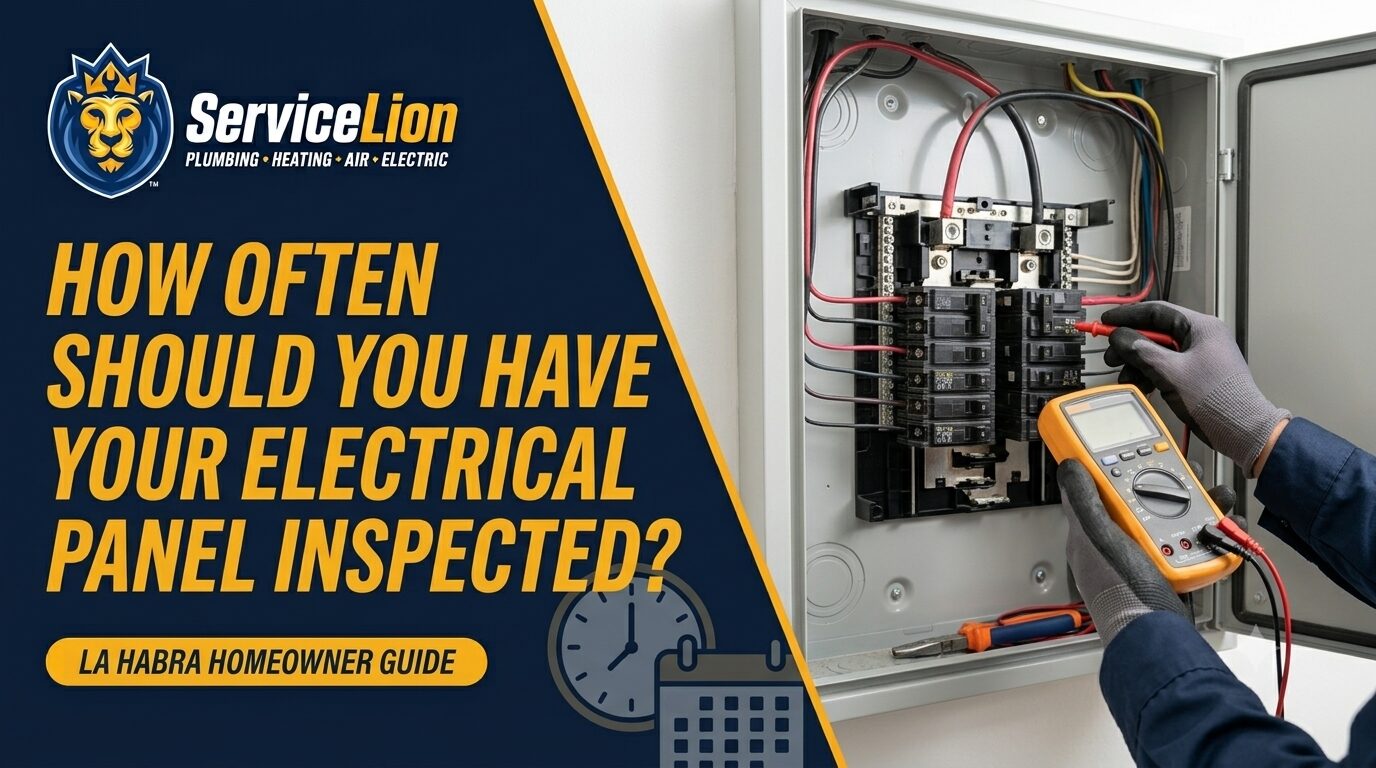
Most homeowners rarely think about their electrical panel unless a breaker trips.
Hidden behind a garage wall, utility room, or exterior cabinet, the electrical panel quietly distributes power throughout your home every day. But like any major home system, it benefits from routine inspections—especially as your home and electrical demands change.
If you own a home in La Habra, knowing when to have your electrical panel inspected can help identify potential issues before they become expensive repairs or safety hazards.
Here’s how often electrical panels should be inspected, what electricians look for, and the signs that your panel may need attention sooner.
How Often Should an Electrical Panel Be Inspected?
For most homes, a professional electrical panel inspection every 3–5 years is a good general guideline.
However, more frequent inspections are recommended if:
- Your home is more than 30 years old.
- Your electrical panel is over 20 years old.
- You’ve recently purchased an older home.
- You’re planning a major remodel.
- You’ve installed high-demand appliances like an EV charger or hot tub.
- You’ve experienced recurring electrical issues.
Electrical systems naturally age over time, and routine inspections help ensure your panel continues operating safely.
Why Regular Inspections Matter
Your electrical panel is responsible for safely distributing electricity to every circuit in your home.
Over time, breakers wear out, wiring connections can loosen, moisture may enter the panel, and electrical loads often increase as homeowners add new appliances and electronics.
Many issues develop gradually without obvious warning signs.
A routine inspection can identify problems before they result in:
- Frequent breaker trips
- Equipment damage
- Overheated wiring
- Electrical fires
- Unexpected power outages
Preventive maintenance is almost always less expensive than emergency repairs.
What Happens During an Electrical Panel Inspection?
A licensed electrician will typically inspect:
- The condition of the main breaker
- Individual circuit breakers
- Wire connections
- Signs of overheating or discoloration
- Corrosion or moisture inside the panel
- Proper breaker sizing
- Available panel capacity
- Grounding and bonding
- Overall panel condition and age
If necessary, the electrician may also recommend additional testing or discuss whether your panel has enough capacity for future electrical upgrades.
Signs You Shouldn’t Wait for Your Next Inspection
Schedule an inspection sooner if you notice:
- Breakers that trip repeatedly
- Flickering or dimming lights
- A burning smell near the panel
- Buzzing or humming sounds
- Warm breakers or panel cover
- Rust or moisture inside the panel
- Scorch marks or discoloration
- Appliances losing power unexpectedly
These symptoms may indicate loose connections, overloaded circuits, failing breakers, or other electrical issues that require prompt attention.
Older Electrical Panels Deserve Extra Attention
Many older homes in La Habra still have electrical panels that were installed decades ago.
While age alone doesn’t automatically mean a panel is unsafe, older panels have experienced years of wear and often serve homes with significantly higher electrical demands than they were originally designed to handle.
Modern households commonly use:
- Electric vehicle chargers
- High-efficiency HVAC systems
- Large televisions
- Home offices
- Multiple kitchen appliances
- Smart home devices
An inspection helps determine whether your existing panel is safely handling today’s electrical usage.
When Is a Panel Upgrade Recommended?
Not every inspection results in a panel replacement.
However, an electrician may recommend upgrading if:
- The panel no longer has available breaker space.
- The panel shows signs of deterioration.
- Breakers fail to reset properly.
- You’re adding major electrical equipment.
- The existing service is undersized for your home’s needs.
- The panel is a discontinued model with known safety concerns.
A panel upgrade can improve reliability while preparing your home for future electrical ne