

ostly repairs.
Here are the most common signs you may have a plumbing leak hiding behind your walls.
Your Water Bill Suddenly Increases
One of the earliest warning signs of a hidden leak is an unexplained increase in your monthly water bill.
If your water usage habits haven’t changed but your bill continues climbing, water may be escaping somewhere inside your plumbing system.
Even a slow leak running 24 hours a day can waste hundreds—or even thousands—of gallons of water over time.
You Hear Running Water When Nothing Is On
Do you hear water moving through the pipes even though every faucet, shower, appliance, and irrigation system is turned off?
That sound may indicate water flowing through a hidden leak behind a wall or beneath your home.
While some plumbing noises are normal, constant running water without an obvious source deserves investigation.
Water Stains on Walls or Ceilings
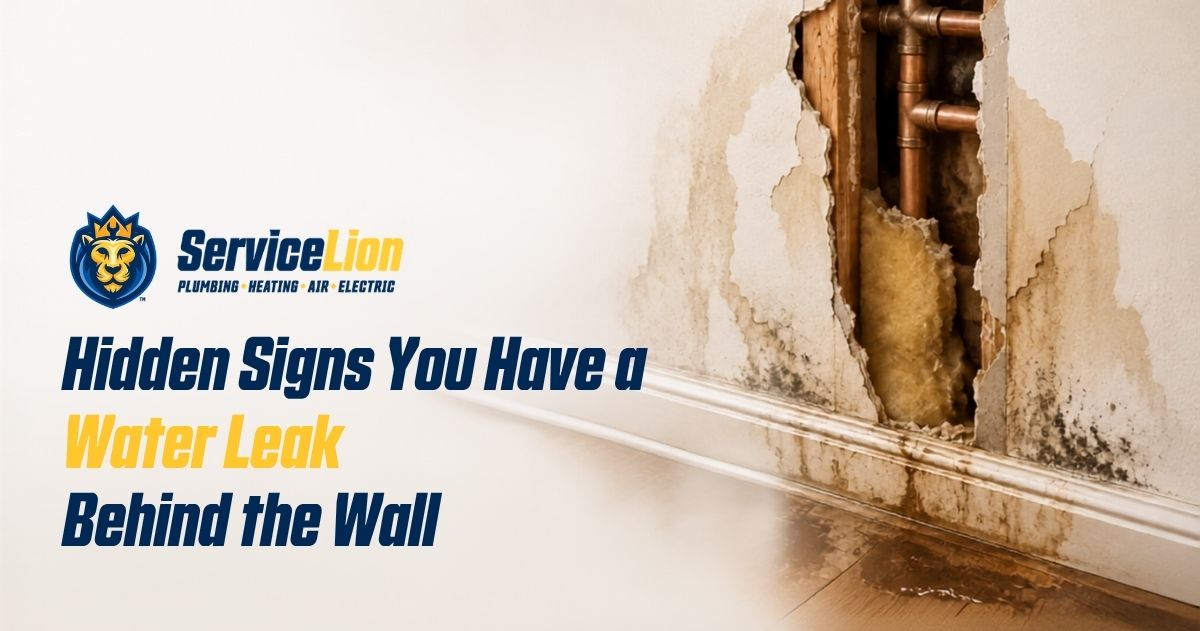
Discoloration is one of the most recognizable signs of a hidden plumbing leak.
Watch for:
- Yellow or brown stains
- Bubbling paint
- Peeling wallpaper
- Soft drywall
- Warped ceilings
These stains often appear long after the leak has already begun, making early detection especially important.
Mold or Mildew Growth
Mold thrives anywhere moisture remains trapped.
If you’ve noticed mold growing on walls, ceilings, or around baseboards—especially in areas that shouldn’t normally be damp—a hidden plumbing leak could be providing the moisture it needs.
You may also notice a persistent musty odor before visible mold appears.
Damp or Soft Flooring
Water doesn’t always stay inside the wall.
Over time, it can seep downward into flooring materials, causing:
- Soft spots
- Warped hardwood
- Buckling laminate
- Loose tile
- Damp carpet
Flooring damage near bathrooms, kitchens, laundry rooms, or water heaters often points to a nearby plumbing leak.
Paint Begins to Bubble or Peel
Moisture trapped behind drywall eventually affects the surface finish.
Paint may:
- Bubble
- Crack
- Peel
- Blister
Many homeowners assume humidity is the cause, but hidden plumbing leaks frequently produce similar symptoms.
Low Water Pressure
If a hidden leak allows water to escape before reaching your fixtures, you may notice reduced water pressure throughout the house.
While low pressure can have many causes, combining it with higher water bills or water stains makes a plumbing leak much more likely.
Your Water Meter Keeps Running
One simple way to check for a hidden leak is by watching your water meter.
Turn off:
- Faucets
- Toilets
- Washing machines
- Dishwashers
- Irrigation systems
Then check the water meter.
If the meter continues moving despite no water being used, your plumbing system may have an active leak somewhere.
Why Hidden Leaks Shouldn’t Be Ignored
Small leaks often become much larger problems over time.
Without repair, they can lead to:
- Mold growth
- Damaged insulation
- Wood rot
- Drywall replacement
- Flooring damage
- Structural deterioration
- Higher utility bills
The sooner the leak is located, the less damage it typically causes.
How Plumbers Find Hidden Leaks
Today’s plumbers use specialized leak detection equipment that often eliminates the need to open multiple walls.
Depending on the situation, leak detection may involve:
- Acoustic listening equipment
- Moisture meters
- Thermal imaging cameras
- Pressure testing
- Video pipe inspections
These tools help pinpoint the leak while minimizing unnecessary damage to your home.
A hidden plumbing leak rarely fixes itself.
If you’ve noticed water stains, musty odors, rising water bills, or unexplained moisture inside your home, scheduling a professional inspection early can help prevent much more extensive repairs.
Service Lion Plumbing Heating Air Electric provides professional leak detection, plumbing inspections, and water leak repairs throughout Costa Mesa and Orange County. If you suspect a hidden leak behind your walls, call (657) 530-5808 or schedule online to have one of our licensed plumbers locate the source before the damage gets worse.
FAQ
How can I tell if I have a hidden water leak?
Common signs include higher water bills, water stains, mold growth, musty odors, damp flooring, peeling paint, and the sound of running water when no fixtures are in use.
Can a hidden leak cause mold?
Yes. Even a slow plumbing leak can provide enough moisture for mold to grow behind walls, ceilings, and flooring.
Will homeowners insurance cover hidden water leaks?
Coverage depends on your insurance policy. Many policies cover sudden and accidental water damage but may not cover damage caused by long-term neglected leaks.
How do plumbers detect leaks behind walls?
Professional plumbers may use moisture meters, thermal imaging cameras, acoustic leak detection equipment, pressure testing, and video inspections to locate hidden leaks with minimal disruption.
Is a hidden water leak considered an emergency?
It can be. While a small leak may not require immediate emergency service, delaying repairs can lead to extensive water damage, mold growth, and significantly higher repair costs.