

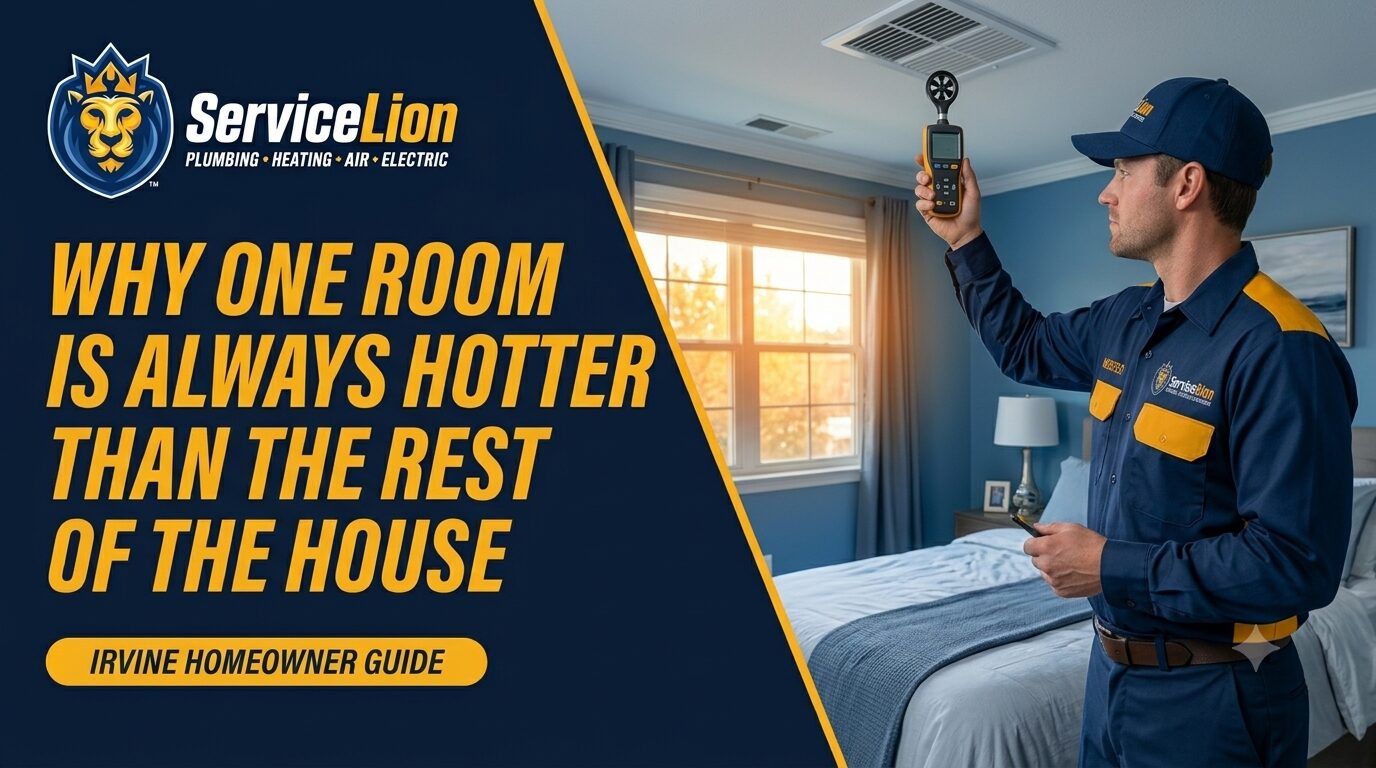
Does your bedroom feel like a sauna while the rest of the house stays comfortable?
Uneven temperatures are one of the most common HVAC complaints among homeowners. While your air conditioner may appear to be working normally, several factors can prevent cool air from reaching every room equally.
If one room in your Irvine home is consistently hotter than the rest of the house, the issue is often fixable—and identifying the cause early can improve both comfort and energy efficiency.
Here are the most common reasons it happens.
Blocked or Closed Air Vents
Before assuming something is wrong with your HVAC system, check the supply and return vents in the affected room.
Sometimes furniture, rugs, curtains, or even decorative items block airflow without homeowners realizing it.
Make sure:
- Supply vents are fully open.
- Return vents aren’t blocked.
- Furniture isn’t covering vents.
- Air filters are clean.
Even small airflow restrictions can affect room temperature.
Dirty Air Filters
A clogged HVAC air filter reduces airflow throughout the entire system.
When airflow becomes restricted, the rooms furthest from the air handler often receive the least amount of conditioned air.
Replacing your air filter regularly helps improve airflow and allows your HVAC system to cool more evenly.
Leaky or Damaged Ductwork
Cool air travels through ductwork before reaching each room.
If a duct has become disconnected, crushed, or developed leaks, a significant amount of conditioned air may escape into the attic or crawl space before ever reaching the room.
Signs of ductwork issues include:
- Weak airflow from vents
- Uneven temperatures
- Higher energy bills
- Longer cooling cycles
A professional duct inspection can identify leaks that aren’t visible from inside the home.
Poor Airflow Balance
Not every room requires the same amount of conditioned air.
Factors like room size, ceiling height, window placement, and sun exposure all influence how much cooling a room needs.
An HVAC technician can perform an airflow balancing assessment to adjust dampers and optimize airflow throughout the home.
Too Much Sunlight
South- and west-facing rooms naturally absorb more heat during the afternoon.
Large windows without blinds, shades, or energy-efficient glass allow solar heat to raise indoor temperatures even while the air conditioner is running.
Improving window coverings or insulation may reduce heat gain significantly.
Insufficient Attic Insulation
During the summer, attic temperatures can exceed 130°F.
If insulation above the affected room has settled or deteriorated, more heat transfers into the living space below.
Homes with poor attic insulation often experience upstairs bedrooms that remain noticeably warmer than downstairs living areas.
An Aging or Undersized HVAC System
If your air conditioner is too small for your home’s cooling needs—or has lost efficiency with age—it may struggle to maintain even temperatures.
Rooms located furthest from the air handler are often the first to experience uneven cooling.
A professional HVAC evaluation can determine whether your system is properly sized and operating efficiently.
Closed Interior Doors
Many homeowners don’t realize that permanently closing bedroom doors can affect airflow.
Modern HVAC systems rely on balanced airflow between supply and return vents.
Closing doors without adequate return air pathways can reduce circulation and cause certain rooms to become warmer.
When Should You Call an HVAC Professional?
It’s time for an inspection if:
- One room is consistently hotter year-round.
- Airflow from vents is weak.
- Your energy bills have increased.
- The air conditioner runs constantly.
- Adjusting vents doesn’t improve comfort.
- Hot and cold spots continue getting worse.
An HVAC technician can identify whether the issue involves airflow, ductwork, insulation, equipment performance, or system design.
How HVAC Technicians Diagnose Uneven Cooling
Professional troubleshooting may include:
- Measuring airflow at each vent.
- Inspecting ductwork for leaks.
- Checking refrigerant levels.
- Evaluating blower performance.
- Inspecting attic insulation.
- Testing thermostat operation.
- Assessing overall system sizing.
Finding the actual cause prevents unnecessary repairs and helps restore consistent comfort throughout your home.
A room that’s always warmer than the rest of the house isn’t something you simply have to live with.
Whether the issue involves airflow, insulation, ductwork, or your HVAC equipment, identifying the problem early can improve comfort while helping your system operate more efficiently.
Service Lion Plumbing Heating Air Electric provides HVAC inspections, ductwork evaluations, air balancing, and air conditioning repairs throughout Irvine and Orange County. If one room in your home never seems to cool down, call (657) 530-5808 or schedule online to have one of our licensed HVAC technicians identify the cause.
FAQ
Why is only one room in my house hot?
Common causes include blocked vents, leaky ductwork, poor insulation, excessive sunlight, airflow imbalances, or HVAC system issues.
Can dirty air filters cause uneven cooling?
Yes. A clogged air filter restricts airflow throughout the system, often affecting rooms that are farthest from the air handler.
Will closing vents in other rooms help?
Usually not. Closing vents can increase pressure inside the duct system and may actually reduce overall HVAC efficiency.
Can duct leaks make one room hotter?
Absolutely. If conditioned air escapes before reaching the room, airflow decreases and temperatures rise.
Do I need a new air conditioner if one room is always hot?
Not necessarily. Many uneven cooling problems are caused by ductwork, airflow balancing, insulation, or maintenance issues rather than the air conditioner itself.