

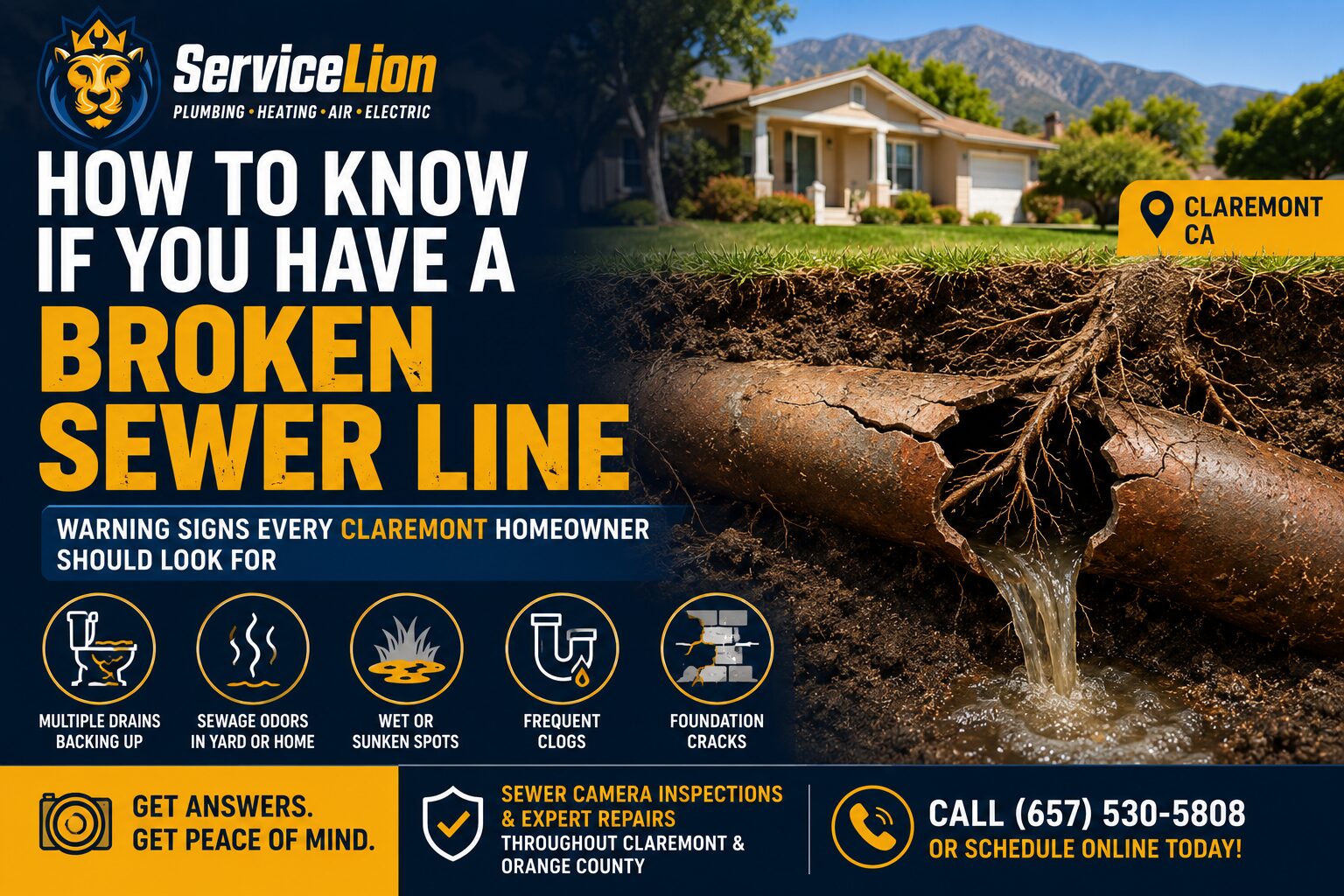
A broken sewer line is the kind of plumbing problem that’s easy to miss at first — and hard to ignore once it’s advanced. The sewer line running from your home to the street sits underground, out of sight, and rarely gives obvious warning until things have already gotten bad.
The good news is that broken sewer lines usually give signals before they fail completely. Knowing what to look for can mean the difference between a targeted repair and a full sewer replacement — or worse, sewage backing up into your Irvine home.
What Causes Sewer Lines to Break
Sewer lines don’t typically fail overnight. The most common causes develop over years:
Age and material degradation — Older clay and cast iron pipes become brittle over decades. Clay pipes crack and crumble; cast iron corrodes from the inside out. Many Irvine homes built in the 1970s and ’80s have original sewer laterals that are now reaching the end of their expected lifespan.
Tree root infiltration — As covered in a previous article, tree roots enter through joints and cracks, then expand and cause the pipe to fracture further.
Soil movement and settling — Southern California’s seismic activity and clay-heavy soils that expand and contract with moisture cause underground pipes to shift, separate at joints, or develop low spots (called bellies) where waste accumulates.
Grease and debris buildup — Heavy buildup over time can cause corrosion, stress pipe walls, and eventually lead to collapse in older pipes.
Ground pressure or physical damage — Heavy vehicles driving over a shallow sewer line, or nearby construction and excavation, can crack or crush pipes.
Warning Signs of a Broken Sewer Line
Multiple Drains Backing Up or Running Slow
A single slow drain is usually a localized clog. When multiple drains throughout the house are slow or backing up — particularly toilets, showers, and floor drains — the problem is more likely in the main sewer line serving the whole house.
If flushing one toilet causes water to back up in a nearby shower drain, that’s a classic sign of a main line obstruction or collapse.
Sewage Odors in the Yard or Inside the Home
Your sewer system is designed to be sealed. When a line cracks or separates, sewage gas escapes — and sewage gas has an unmistakable odor. A persistent rotten or sulfuric smell in your yard, particularly along the path between your house and the street, suggests a leak underground.
Inside the home, sewer gas coming back up through floor drains or infrequently used fixtures can also indicate a break.
Wet Patches or Sunken Areas in the Yard
Sewage leaking from a broken line saturates the soil above it. You may notice an unusually wet patch of ground even during dry weather, an area of grass that’s unexpectedly lush or green (sewage acts as fertilizer), or a soft, spongy, or sunken section of your lawn.
A more dramatic version of this — a visible depression or sinkhole — usually indicates a more serious pipe collapse or void developing beneath the surface.
Frequent and Recurring Drain Blockages
If your plumber has cleared your main drain line multiple times in the past year or two and the problem keeps coming back, there’s likely a structural issue — a collapse, a belly, or significant root damage — that snaking can clear temporarily but not fix permanently.
Foundation Cracks or Shifts
A sewer line running beneath or near the foundation that’s been leaking for a long time can erode soil support beneath the slab, contributing to settling, shifting, or cracking. This is a more advanced and serious consequence of a long-term leak.
Unusually High Water Bills Without Explanation
A major break or separation in a supply-side connection can cause water loss that shows on your bill. This is less common for the sewer line itself (which carries wastewater rather than fresh water), but a compromised cleanout or connection point can sometimes cause this.
How a Broken Sewer Line Is Diagnosed
The definitive diagnostic tool is a sewer camera inspection — a small waterproof camera fed through a cleanout access point that transmits live video of the pipe interior. This reveals:
- The location and extent of cracks or breaks
- Collapsed sections
- Root infiltration
- Offset joints (where sections have separated or shifted)
- Bellies (low spots where waste pools)
- The pipe material and its overall condition
Without a camera inspection, any repair recommendation is a guess. A good plumber won’t tell you what needs to be done until they’ve seen what’s actually happening inside the pipe.
Repair Options
Spot repair — If the break is isolated and the rest of the pipe is in decent condition, opening only the affected area and replacing that section may be appropriate.
Trenchless pipe lining — A liner is installed inside the existing pipe and cured in place, creating a smooth, jointless interior pipe. Seals cracks and eliminates root entry points without major excavation.
Pipe bursting — A new pipe is pulled through the old one, fracturing the old pipe outward. A full-length replacement without the trench.
Traditional excavation — When the damage is extensive or the pipe is too deteriorated for trenchless methods, open excavation and full replacement is the most straightforward path.
A broken sewer line gives off warning signs for a reason — the system is under stress and asking for help before it fails completely. Paying attention to those signs and getting a camera inspection at the first hint of trouble is almost always cheaper than waiting until the situation becomes an emergency.
Service Lion Plumbing Heating Air Electric provides sewer camera inspections and full sewer line repair throughout Irvine and Orange County. If something feels off with your drains, don’t wait — call (657) 530-5808 or schedule online.
FAQ
How long does a typical residential sewer line last?
It depends heavily on the pipe material. PVC pipes can last 50–100 years. Cast iron typically lasts 50–75 years. Clay sewer pipes, common in older Irvine neighborhoods, can fail in as few as 50 years under adverse conditions.
Can a broken sewer line cause mold inside my home?
Yes — if sewage is backing up into the home or seeping into crawl spaces or wall cavities, the moisture and organic material create conditions for significant mold growth.
Does homeowners insurance cover a broken sewer line?
Standard policies generally don’t cover gradual deterioration or sewer line replacement. Some insurers offer sewer line endorsements or riders that cover this type of repair. Sewer line coverage is worth adding if your home has older pipes.
How long does sewer line repair take?
A spot repair or trenchless lining of a single sewer lateral can often be completed in one day. More extensive repairs or replacements may take 2–3 days. Your plumber will provide a timeline after the camera inspection.
What should I do while waiting for a plumber if my sewer is backing up?
Minimize water use as much as possible — don’t flush toilets, run dishwashers, or do laundry. This limits how much backup comes into the home while you wait for service.