

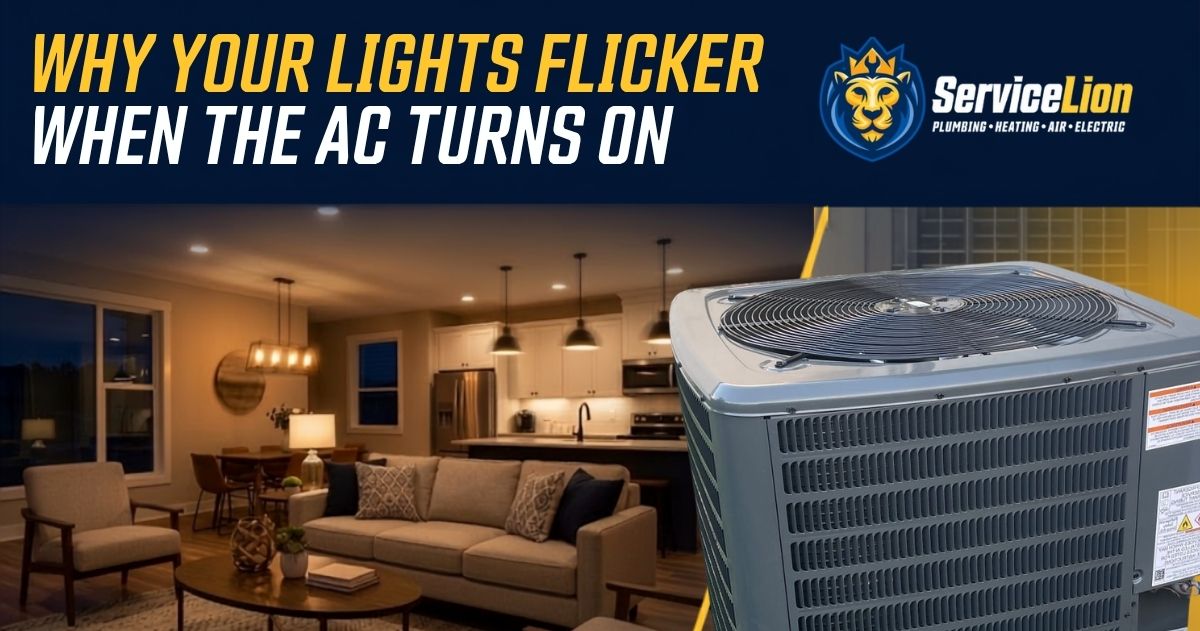
You switch on the air conditioner, and just as the compressor kicks in, the lights throughout your home briefly dim or flicker.
If you’ve noticed this happening in your Anaheim home, you’re not alone. It’s one of the most common electrical concerns homeowners experience during Southern California’s warmer months.
The good news? A brief, minor flicker isn’t always a sign that something is wrong. But if the flickering is frequent, severe, or getting worse over time, it could indicate an electrical issue that shouldn’t be ignored.
Here’s what causes it, when it’s considered normal, and when it’s time to have your home’s electrical system inspected.
Why Lights Flicker When the AC Starts
Air conditioners require a large amount of electricity to start the compressor.
For a split second, the unit draws significantly more power than it uses while running. This is called startup current or inrush current.
As the compressor starts, your home’s electrical system experiences a temporary voltage drop. In many homes, this causes lights to dim for less than a second before returning to normal brightness.
A very slight, occasional flicker during startup can be completely normal.
The concern begins when that flicker becomes more noticeable, lasts longer than a second, or happens throughout the entire cooling cycle.
When It’s Probably Normal
A brief flicker may simply be part of normal operation if:
- The lights dim for less than one second.
- It only happens when the air conditioner initially starts.
- The problem hasn’t become more noticeable over time.
- No breakers are tripping.
- The AC cools normally.
Many Anaheim homes experience a slight voltage dip during compressor startup, especially on particularly hot afternoons when the electrical grid is under heavier demand.
When Flickering Indicates a Problem
Your Air Conditioner Is Drawing Too Much Current
As air conditioners age, components such as the compressor or start capacitor wear out.
A failing capacitor forces the compressor to work harder during startup, increasing electrical demand and causing more noticeable light flickering.
If the flickering has gradually become worse over the past year or two, your HVAC system should be inspected.
Your Electrical Panel Is Near Capacity
Many older Anaheim homes were built before today’s electrical demands became common.
Large televisions, electric vehicle chargers, modern appliances, and high-efficiency HVAC equipment all place greater demands on an electrical system than homes were originally designed for.
If your electrical panel is already close to its limit, even normal AC startup can produce significant voltage drops throughout the house.
An electrician can evaluate whether your panel has enough available capacity or whether an upgrade would improve performance and safety.
Loose Electrical Connections
Loose wiring inside the electrical panel, meter, or branch circuits can create resistance that causes voltage fluctuations.
Unlike normal startup dimming, loose connections often cause lights to flicker randomly—even when the air conditioner isn’t running.
Because loose connections generate heat, they should always be inspected promptly by a licensed electrician.
Voltage Problems From the Utility
Occasionally, the issue isn’t inside your home at all.
If several neighbors notice lights flickering during periods of high electrical demand, the local utility may be experiencing voltage fluctuations.
An electrician can determine whether the issue originates inside your home or from the utility service.
Signs You Should Schedule an Inspection
Call an electrician if you notice:
- Lights dim dramatically every time the AC starts.
- Lights continue flickering while the AC is running.
- Breakers trip when the air conditioner operates.
- The electrical panel feels warm.
- You hear buzzing from outlets or the breaker panel.
- Flickering occurs in multiple rooms.
- The problem has become progressively worse.
Electrical issues rarely improve on their own, and identifying the cause early can help prevent larger repairs later.
How an Electrician Diagnoses the Problem
A professional electrical inspection may include:
- Measuring voltage during AC startup.
- Inspecting the electrical panel for loose or damaged connections.
- Checking breaker sizing.
- Evaluating overall panel capacity.
- Testing circuits for excessive voltage drop.
- Coordinating with an HVAC technician if the air conditioner appears to be the source of the excessive electrical draw.
The goal is to determine whether the issue lies with the home’s electrical system, the air conditioner, or the incoming utility service.
Can a Panel Upgrade Help?
Sometimes.
If your home has an older 100-amp panel that’s serving significantly more electrical equipment than it was originally designed for, upgrading to a larger panel may reduce voltage fluctuations while also improving overall electrical safety.
However, not every flickering light requires a panel replacement.
A licensed electrician should identify the root cause before recommending any major work.
Most homeowners are surprised to learn that a simple loose connection or failing HVAC capacitor—not the panel itself—is responsible for the problem.
A small flicker when your air conditioner starts can be completely normal. But if the flickering becomes stronger, more frequent, or starts happening throughout the day, it’s worth having your electrical system evaluated before a small issue becomes a larger one.
Service Lion Plumbing Heating Air Electric provides electrical troubleshooting, panel inspections, and electrical upgrades throughout Anaheim and Orange County. If your lights flicker every time your air conditioner starts, call (657) 530-5808 or schedule online to have one of our licensed electricians diagnose the issue.
FAQ
Is it normal for lights to dim when the air conditioner starts?
A slight dimming that lasts less than a second is usually normal. Significant or repeated flickering should be inspected.
Can a bad AC capacitor cause lights to flicker?
Yes. A failing start capacitor can increase the electrical current needed during startup, making lights dim more noticeably.
Does flickering mean I need a new electrical panel?
Not necessarily. While an undersized panel can contribute, loose wiring, failing HVAC components, or utility voltage issues may also be responsible.
Is flickering dangerous?
It can be. Minor startup dimming is generally harmless, but persistent flickering can indicate loose electrical connections or overloaded circuits that should be inspected.
Should I call an electrician or an HVAC technician?
If you’re unsure, start with an electrician. They can determine whether the problem originates with your home’s electrical system or whether the air conditioner itself needs HVAC service.