

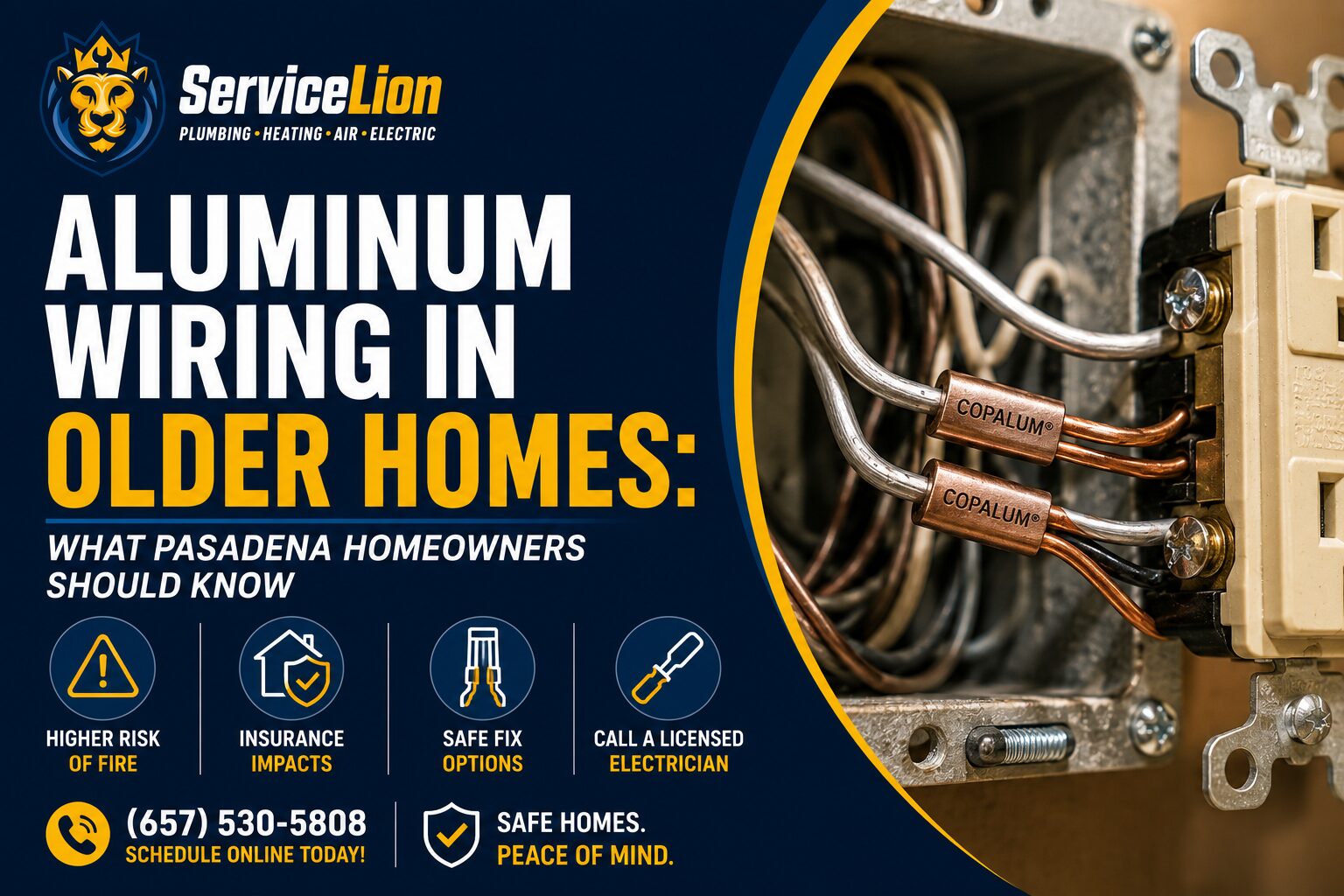
If your Pasadena home was built between roughly 1965 and 1973, there’s a real possibility your branch circuit wiring — the wiring that runs from your electrical panel to your outlets, switches, and light fixtures — is aluminum rather than copper.
This doesn’t mean your home is immediately dangerous. But it does mean there are specific risks that come with aluminum wiring, and most homeowners aren’t aware of them until they’re buying, selling, or renovating — and suddenly it becomes the center of a home inspection report.
Here’s what aluminum wiring actually is, why it matters, and what your options are.
Why Aluminum Wiring Was Used
Copper prices spiked significantly in the mid-1960s, and builders turned to aluminum as a less expensive alternative for branch circuit wiring. For a period of about a decade, aluminum wiring was widely installed in residential construction across California and the rest of the country — including many of Pasadena’s neighborhoods.
By the early 1970s, the fire hazard problems associated with aluminum branch circuit wiring were well documented, and copper became the standard again. But the homes built during that window still have the original wiring in their walls.
What Makes Aluminum Wiring a Safety Concern
The issue isn’t the aluminum wire itself running through the walls — it’s what happens at the connection points.
Aluminum expands and contracts more than copper as it heats and cools during normal current flow. Over years and decades, this movement causes connections at outlets, switches, and light fixtures to loosen. Loose connections arc, generate heat, and can ignite surrounding materials.
Aluminum also oxidizes when exposed to air, and aluminum oxide is a poor conductor. This increases resistance at connection points, which generates additional heat.
The Consumer Product Safety Commission has identified homes with aluminum branch circuit wiring as having a significantly higher risk of electrical fires than homes with copper wiring — not because aluminum wires spontaneously catch fire, but because of what happens at the dozens or hundreds of connection points throughout the house over time.
Signs of a Problem With Aluminum Wiring
Watch for:
- Outlets or switches that feel warm to the touch
- Outlets or light switches that flicker or work intermittently
- A burning smell near outlets or switch plates
- Breakers that trip without an obvious overload
- Discoloration around outlets or covers
These signs warrant an immediate call to a licensed electrician — don’t use the affected outlet or switch until it’s been inspected.
Your Options for Addressing Aluminum Wiring
There are three main approaches, and the right choice depends on your budget, plans for the home, and risk tolerance.
1. COPALUM Connectors (The Gold Standard)
The CPSC-recommended method for making aluminum wiring safe is the use of COPALUM connectors — special crimp connectors that permanently join a short length of copper wire to each aluminum wire at every connection point (outlets, switches, fixtures). The result is a copper connection at every endpoint, eliminating the aluminum connection problem.
COPALUM work must be performed by a licensed electrician certified in this specific method. It’s labor-intensive because every connection point in the home must be addressed, but it’s considered the most reliable permanent fix.
2. AlumiConn Connectors
AlumiConn is an alternative connector that, when properly installed, is also accepted by the CPSC as a repair method. They’re more widely available and somewhat faster to install than COPALUM, which makes them a more common choice in practice.
As with COPALUM, every connection point in the home needs to be addressed — a partial fix only reduces risk rather than addressing it comprehensively.
3. Complete Rewiring
Full replacement of aluminum branch circuit wiring with copper eliminates the issue entirely. This is the most comprehensive solution, but also the most disruptive and expensive — it typically requires opening walls throughout the home.
For homeowners planning a major renovation or addition, rewiring during construction can make sense. For others, the connector methods above offer a less invasive path.
Aluminum Wiring and Homeowners Insurance
Many insurers are more restrictive about insuring homes with aluminum branch circuit wiring, or charge higher premiums. Some will require documentation that the wiring has been properly remediated before issuing or renewing a policy.
If you’re buying a home and the inspection reveals aluminum wiring, this is worth investigating with your insurance provider before closing.
Aluminum branch circuit wiring is a manageable issue — not an automatic disaster, but not something to ignore either. For Pasadena homeowners in homes built between 1965 and 1973, knowing what you have and addressing the connection points properly is a meaningful safety investment.
FAQ
How do I know if my home has aluminum wiring?
The most reliable way is to have a licensed electrician inspect the wiring. If you’re comfortable looking yourself: aluminum wire has a silver appearance (copper is orange/reddish) and wire in the panel or junction boxes is often labeled “AL” or “Aluminum.”
Is it safe to live in a home with aluminum wiring?
Millions of people do without incident. The risk is real but not inevitable — it depends on the condition of the connections throughout the home. Having an electrician inspect and remediate the connections significantly reduces the risk.
Does aluminum wiring affect home resale value?
It can, especially if buyers’ home inspectors flag it (they almost always do in homes from that era). Addressing it proactively — and having documentation of the work — typically removes it as a negotiating issue.
Can I just replace individual outlets and switches myself?
Standard outlets are designed for copper connections. If you replace an outlet in an aluminum-wired home without using the correct connectors, you’ve created a new hazard at that point. Any work on aluminum-wired systems should be done by a licensed electrician familiar with the specific requirements.
What should I do if I just bought a home and discovered it has aluminum wiring?
Contact a licensed electrician to assess the full scope of the wiring and discuss remediation options. Don’t wait until you see a sign of a problem — the whole point of addressing it proactively is to prevent the problem from developing.