

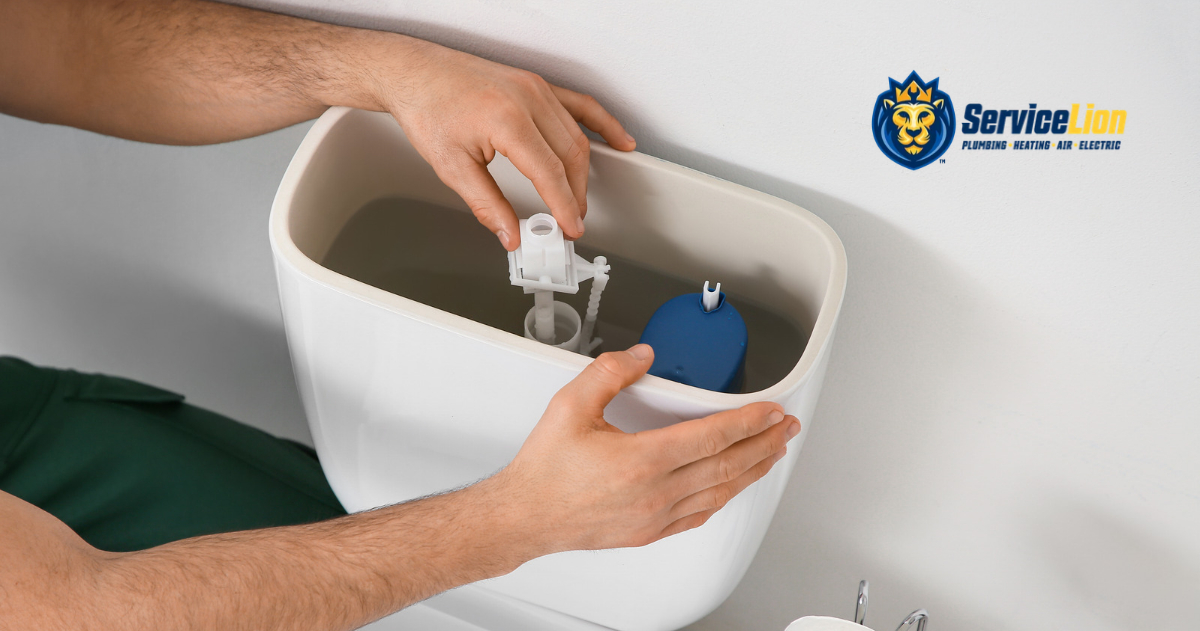
You flush the toilet, hear the usual rush of water, and expect the tank to refill within a minute or two. Instead, the water keeps trickling in, and the toilet takes much longer than usual before it’s ready for another flush.
A toilet tank that’s slow to fill can be frustrating, especially in a busy household where the bathroom gets frequent use.
While the problem may seem minor, slow refilling can indicate a worn fill valve, restricted water supply, or mineral buildup inside the toilet’s components.
For Newport Beach homeowners, understanding what’s causing the delay can help determine whether a simple adjustment or professional plumbing repair is needed.
How Long Should a Toilet Tank Take to Fill?
Most residential toilets refill within approximately 30 seconds to two minutes after flushing, although the exact time depends on the toilet’s design, tank capacity, and available water pressure.
During a normal flush, water leaves the tank and the fill valve opens to replace it. Once the water reaches the appropriate level, the fill valve shuts off.
If the tank takes several minutes to refill, or the water enters in an unusually weak stream, something may be restricting the flow.
The first step is identifying where that restriction might be occurring.
1. The Toilet Fill Valve May Be Worn or Clogged
The fill valve controls how water enters the toilet tank after each flush.
Over time, sediment, mineral deposits, or wear inside the valve can interfere with its operation.
A restricted fill valve may allow only a small amount of water to enter the tank, making the refill process much slower than normal.
Common signs of a fill valve problem include:
- Water entering the tank in a weak stream
- A toilet that takes several minutes to refill
- Hissing or unusual noises during refilling
- Inconsistent water levels
- A valve that doesn’t shut off properly
Some fill valves can be cleaned or adjusted, while others need replacement.
If the valve is aging or repeatedly causing problems, replacing it may be the more practical solution.
2. The Water Supply Valve Isn’t Fully Open
Behind or beneath most toilets is a shutoff valve that controls the water supply to the fixture.
This valve allows you to stop water flow to the toilet without shutting off water to the entire house.
If the valve was partially closed during cleaning, maintenance, or a previous repair, it may be restricting how much water reaches the tank.
Check whether the valve is fully open.
If it’s an older valve that feels stuck, corroded, or difficult to turn, avoid forcing it. Damaging the valve could create a leak or prevent it from shutting off properly.
A plumber can inspect or replace a deteriorating shutoff valve if necessary.
3. Mineral Buildup Is Restricting Water Flow
Mineral deposits can gradually accumulate inside plumbing fixtures and valves.
As water moves through the toilet’s fill valve and supply connections, deposits or sediment may collect in narrow passages.
Over time, these restrictions can reduce the amount of water entering the tank.
You may notice the problem developing gradually rather than appearing overnight.
If the toilet used to refill quickly but has become progressively slower, mineral buildup or sediment inside the fill valve may be contributing to the issue.
4. The Toilet Supply Line May Be Restricted
A flexible supply line connects the shutoff valve to the toilet tank.
Although these lines are designed to deliver water reliably, they can sometimes become kinked, damaged, or internally restricted.
A supply line that has been bent sharply or deteriorated internally may reduce water flow.
Look for visible signs such as:
- Sharp bends or kinks
- Moisture around the connections
- Corrosion near fittings
- Cracking or deterioration
- Unusual swelling or damage
If the supply line appears damaged, it should be replaced rather than adjusted repeatedly.
Avoid disconnecting plumbing connections unless you can safely isolate the water supply and are comfortable performing the repair.
5. The Float Mechanism May Be Malfunctioning
The float mechanism helps the