

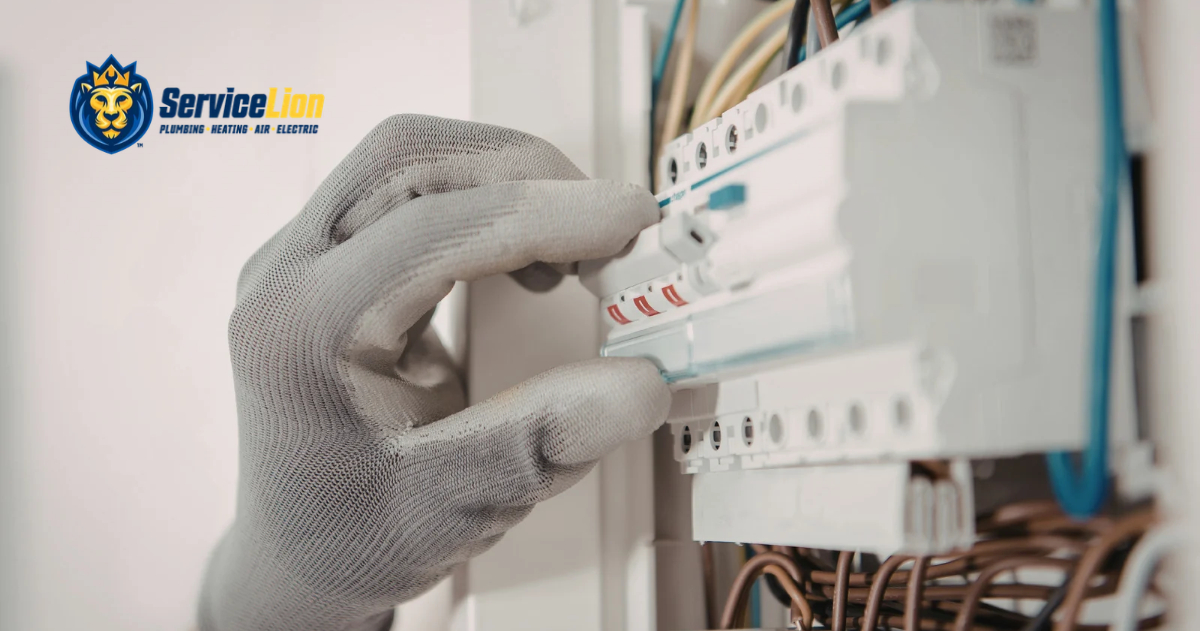
You open your electrical panel and notice something unusual: one of the circuit breakers feels warmer than expected. Maybe you’ve also noticed a faint burning smell, a buzzing sound, or discoloration around the panel.
A hot circuit breaker can be a warning sign that something isn’t working correctly in your electrical system.
Circuit breakers are designed to protect electrical circuits from excessive current. While some warmth can occur during normal operation, excessive heat may indicate an overloaded circuit, loose electrical connection, failing breaker, or another electrical problem.
For homeowners in Huntington Beach, understanding the difference between normal warmth and potentially dangerous overheating can help prevent electrical damage and fire hazards.
Is It Normal for a Circuit Breaker to Feel Warm?
Circuit breakers can generate heat as electricity passes through them, especially when supplying power to appliances or equipment that draw substantial current.
A slightly warm breaker doesn’t automatically indicate a problem.
However, a breaker that feels unusually hot, produces a burning odor, or shows signs of discoloration should be treated as a potential electrical hazard.
Temperature alone isn’t enough to determine whether a breaker is operating safely. Different breaker designs and electrical loads can affect normal operating temperatures.
If you suspect overheating, avoid repeatedly touching the breaker or opening the electrical panel’s protective covers to investigate.
A licensed electrician can measure temperatures, evaluate circuit loads, and inspect the electrical connections safely.
1. The Circuit May Be Overloaded
An overloaded circuit occurs when connected electrical devices demand more current than the circuit is designed to carry.
For example, using several high-powered appliances on the same circuit can place additional demand on its wiring and breaker.
Depending on the load and duration, the breaker may become warmer during operation.
Signs of a possible overloaded circuit include:
- The breaker repeatedly tripping when several appliances operate
- Lights dimming when large appliances start
- Excessive heat near the electrical panel
- Appliances losing power when used together
- A circuit struggling to support normal household activities
A properly functioning breaker should trip when current exceeds its protective limits for a sufficient period.
However, persistent overheating should not be dismissed simply because the breaker hasn’t tripped.
An electrician can assess the circuit load and determine whether appliances need to be redistributed or a dedicated circuit is appropriate.
2. Loose Electrical Connections Can Generate Heat
Electrical connections must remain secure to carry current safely.
If a wire termination or breaker connection becomes loose, electrical resistance can increase at that point.
This can produce localized heating, sometimes even when the circuit isn’t overloaded.
Loose connections may develop because of improper installation, thermal expansion and contraction, deterioration, or other mechanical factors.
Possible warning signs include:
- A burning or melting plastic smell
- Discoloration near a breaker
- Intermittent electrical problems
- Buzzing or crackling sounds
- Unusual heat concentrated around one part of the panel
Loose electrical connections can be dangerous because they may produce significant heat without drawing enough current to trip the breaker.
Identifying and correcting these problems requires professional electrical testing.
3. The Circuit Breaker May Be Failing
Circuit breakers contain internal mechanisms designed to interrupt electrical current when certain fault conditions occur.
Like other electrical components, breakers can deteriorate or become damaged.
A failing breaker may develop internal resistance, unreliable connections, or other defects that contribute to overheating.
Potential signs include:
- Unusual heat around one breaker
- Visible damage or discoloration
- A breaker that won’t remain in the correct operating position
- Repeated tripping without an obvious cause
- Burning odors or abnormal electrical noises
A hot breaker doesn’t automatically mean the breaker itself is defective.
The problem could also involve the connected circuit, wiring, or electrical panel.
A qualified electrician should determine the cause before replacing components.
4. The Electrical Panel May Have a Damaged Connection
The breaker isn’t always the source of the heat.
Inside the electrical panel, breakers connect to conductive components that distribute electricity to individual circuits.
If a breaker has a poor connection to the panel’s bus bar, localized resistance and heating can occur.
This may damage both the breaker and the panel connection.
Warning signs can include unusual heat, discoloration, burning odors, or visible damage around the breaker area.
Because these components are located inside the electrical panel, homeowners should not attempt to inspect them by removing protective covers.
Even when individual branch circuits are switched off, parts of the panel may remain energized.
An electrician can determine whether the damage is limited to a breaker connection or whether the panel requires more extensive repairs.
5. High Electrical Demand May Be Contributing to the Problem
Homes today often rely on more electrical equipment than they did in the past.
Air conditioners, electric dryers, kitchen appliances, and EV chargers can place substantial demands on residential electrical systems.
When multiple large electrical loads operate simultaneously, the electrical panel and its components may experience increased operating temperatures.
However, a properly designed and functioning electrical system should be able to support its intended loads safely.
Excessive heat isn’t something homeowners should accept as normal simply because several appliances are running.
If your Huntington Beach home has recently added major electrical equipment, an electrician can evaluate whether the existing circuits and panel are suitable for the additional demand.
6. Corrosion or Moisture May Be Affecting Electrical Connections
Electrical panels and their connections can deteriorate when exposed to moisture or corrosive conditions.
In coastal communities such as Huntington Beach, environmental exposure can be an additional consideration, particularly for equipment installed outdoors or in areas subject to moisture.
Corrosion may affect electrical contact surfaces and contribute to increased resistance or unreliable connections.
Possible warning signs include:
- Rust or corrosion visible on accessible exterior surfaces
- Water stains around the panel enclosure
- Moisture near electrical equipment
- Discoloration or deterioration
- Unusual heating or electrical performance problems
Corrosion doesn’t automatically mean the panel needs replacement, but affected electrical components should be evaluated.
If water is entering the electrical panel, avoid operating the equipment and arrange for professional assistance.
Can a Hot Circuit Breaker Cause an Electrical Fire?
Yes. Excessive heat inside an electrical panel can damage insulation, breakers, wiring, and other components.
In severe cases, overheating or electrical arcing may ignite nearby combustible materials.
The risk depends on the underlying cause and the condition of the electrical system.
A breaker that feels slightly warm during normal operation is different from one producing a burning odor, visible smoke, or signs of melting.
However, homeowners shouldn’t rely on touch alone to decide whether an electrical panel is safe.
If you notice smoke, sparks, strong burning odors, or visible melting, keep away from the panel. Do not attempt to operate a visibly damaged breaker. If there is smoke or an active fire, evacuate and call emergency services.
What Should You Do If a Circuit Breaker Feels Hot?
If you suspect a breaker is overheating, prioritize safety.
- Stop using appliances connected to the affected circuit if you can do so safely.
- Avoid touching the breaker repeatedly to check its temperature.
- Do not remove the electrical panel cover or attempt to inspect internal wiring.
- Look for warning signs from a safe distance, including smoke, discoloration, or burning odors.
- Contact a licensed electrician to evaluate the breaker, wiring, and panel connections.
If the panel shows signs of active overheating, do not attempt to reset breakers or continue using the affected circuit.
Avoid replacing a breaker with one rated for higher amperage as a way to stop tripping or overheating. Breaker ratings must be appropriate for the circuit wiring and electrical installation.
When Should You Call an Electrician in Huntington Beach?
Schedule an electrical inspection if:
- A breaker feels unusually hot.
- The electrical panel produces a burning smell.
- You hear buzzing or crackling near the panel.
- A breaker repeatedly trips.
- You notice discoloration or melting around a breaker.
- The panel shows signs of moisture or corrosion.
- Electrical problems started after adding a major appliance.
- One breaker appears significantly hotter than neighboring breakers.
An electrician can evaluate circuit loading, breaker condition, connection integrity, and other factors to identify the cause of overheating.
Don’t Ignore Excessive Heat in Your Electrical Panel
A circuit breaker that feels warm isn’t necessarily defective, but excessive heat can indicate a problem that deserves immediate attention.
Overloaded circuits, loose connections, failing breakers, and damaged panel components can all contribute to overheating.
The safest approach is to have the electrical system evaluated rather than waiting for a breaker to fail or repeatedly trip.
Service Lion Plumbing Heating Air Electric provides residential electrical repairs, circuit breaker inspections, and electrical panel services throughout Huntington Beach and Orange County. If you’re concerned about a hot circuit breaker or signs of electrical panel overheating, call (657) 567-7305 or schedule electrical service online.
Frequently Asked Questions
Is it normal for a circuit breaker to feel warm?
Some warmth can occur during normal operation, particularly when a circuit carries a substantial load. However, excessive heat, burning odors, discoloration, or unusual noises may indicate an electrical problem.
Why is one circuit breaker hotter than the others?
A breaker may operate at a different temperature because of its electrical load, but unusual heating can also result from loose connections, internal breaker defects, or damaged panel components. Professional testing is needed to identify the cause.
Can a circuit breaker overheat without tripping?
Yes. Certain problems, including high-resistance connections, can produce localized heating without creating the overcurrent conditions needed to trip a standard breaker.
Should I turn off a circuit breaker if it’s hot?
If the breaker is unusually hot or shows signs of damage, stop using the affected circuit and contact an electrician. Do not touch or operate a breaker that is smoking, sparking, melting, or otherwise visibly unsafe.
When should I call an electrician in Huntington Beach for an overheating breaker?
Contact an electrician promptly if a breaker feels excessively hot, repeatedly trips, produces unusual noises, or shows signs of burning or discoloration. Smoke or active fire requires emergency assistance.