

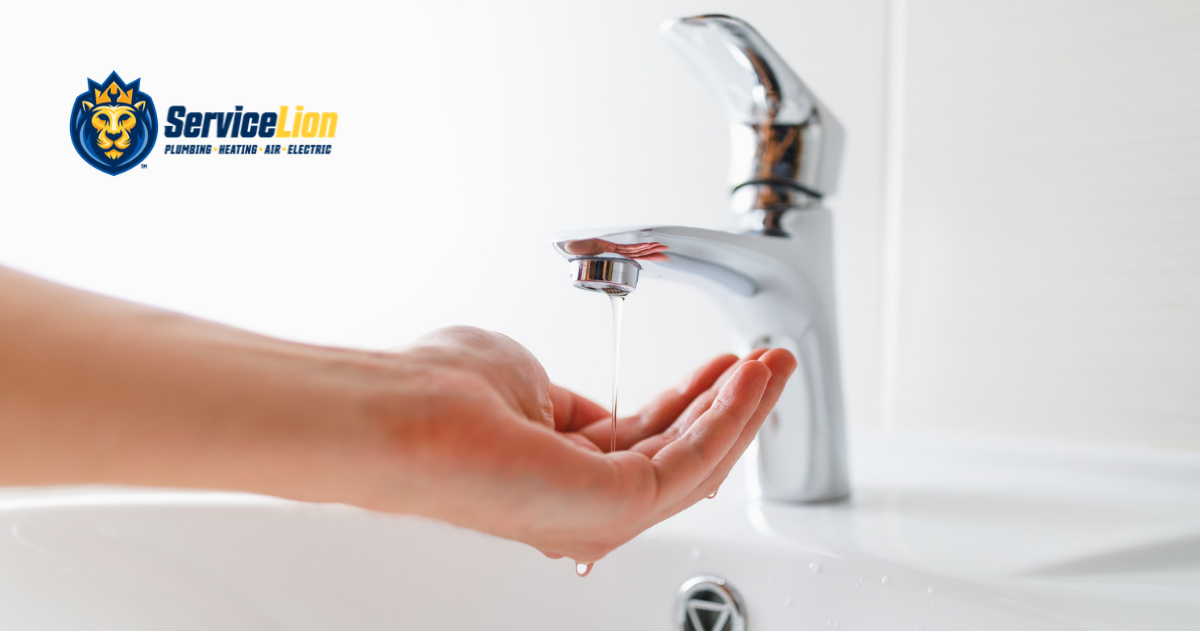
You turn on the kitchen faucet and get little more than a weak stream. But the shower works normally, the bathroom sink has plenty of pressure, and everything else in the house seems fine.
When low water pressure affects just one faucet, that’s actually a useful clue.
Instead of pointing to a problem with your entire home’s water supply, the issue is usually somewhere at or near that particular fixture. A clogged aerator, partially closed supply valve, worn cartridge, or buildup inside the faucet can all restrict water flow.
For Anaheim homeowners dealing with one weak faucet, here are some of the most common places to look.
Start With the Faucet Aerator
The aerator is the small screen attached to the end of the faucet spout.
Its job is to mix air with the water stream and control the flow. Because all the water leaving the faucet passes through it, the aerator can gradually collect:
- Mineral deposits
- Sediment
- Rust particles
- Small pieces of debris
As those materials build up, the openings become restricted and water flow gets weaker.
If both hot and cold water have equally low pressure from the same faucet, a clogged aerator is one of the first things worth checking.
Depending on the faucet, the aerator may be removable for cleaning. If it’s heavily clogged or damaged, replacement may be easier.
Check Whether the Problem Is Hot, Cold, or Both
Before troubleshooting further, test the faucet at different temperature settings.
Turn on only the cold water and note the pressure. Then do the same with the hot water.
This can help narrow down the problem.
If both hot and cold water are weak, the restriction may be at the aerator, faucet, or another shared point.
If only the hot water is weak, the problem may be somewhere along the hot-water supply to that fixture.
If only the cold water is weak, the cold-water supply side may be restricted.
This simple test can provide useful information before anything is taken apart.
Make Sure the Supply Valves Are Fully Open
Under most sinks, you’ll find shutoff valves controlling the hot and cold water supply.
These valves allow water to be turned off to the faucet without shutting down water to the entire home.
If one was recently adjusted during plumbing work, cleaning, or a fixture replacement, it may not have been reopened completely.
A partially closed valve restricts the amount of water reaching the faucet.
Check whether both supply valves appear to be fully open.
If an older valve is difficult to turn, corroded, or leaking, don’t force it. Aging shutoff valves can fail when they’re disturbed and may need professional replacement.
The Faucet Cartridge May Be Clogged or Worn
Many modern faucets use an internal cartridge to control water flow and temperature.
Over time, mineral deposits or debris can accumulate inside the cartridge and restrict the amount of water passing through.
The cartridge itself can also wear out.
Possible signs of a cartridge problem include:
- Reduced water flow
- Difficulty adjusting temperature
- Faucet handle becoming stiff
- Dripping after the faucet is turned off
- Uneven hot and cold flow
If cleaning the aerator doesn’t improve the pressure and the supply valves are open, the cartridge becomes another likely place to investigate.
The Supply Line Could Be Restricted
Flexible supply lines connect the shutoff valves beneath the sink to the faucet.
A supply line can sometimes become kinked, damaged, or internally restricted.
If the line was recently moved—for example, while storing items under the sink—it may have been bent enough to reduce flow.
Visually inspect the accessible supply lines for obvious kinks or damage.
If the line appears deteriorated, swollen, corroded, or otherwise damaged, replacement may be necessary.
Mineral Buildup Can Develop Inside the Faucet
Mineral deposits don’t only collect on the aerator.
Over time, buildup can develop inside faucet passages, cartridges, valves, and other components.
This can gradually reduce water flow even when the faucet looks perfectly normal from the outside.
If you’ve cleaned the aerator and confirmed that the supply valves are open but the pressure remains weak, internal buildup may be restricting the fixture.
At that point, the faucet may need to be disassembled, serviced, or replaced depending on its condition.
What If the Pressure Dropped Suddenly?
How quickly the problem appeared can provide another clue.
A gradual reduction in flow often points toward mineral buildup or a component that’s slowly becoming restricted.
A sudden pressure drop may be related to:
- Debris entering the aerator
- A supply valve being partially closed
- A damaged faucet component
- Recent plumbing work
- Sediment being disturbed elsewhere in the plumbing system
Think about whether anything changed around the time the problem started.
If plumbing work was recently performed elsewhere in the home, small amounts of debris can sometimes travel through the pipes and become trapped at a faucet aerator.
What If More Than One Faucet Has Low Pressure?
That’s a different problem.
If several faucets, showers, or fixtures throughout your Anaheim home suddenly have weak water pressure, the issue may extend beyond one fixture.
Possible causes could involve the home’s water supply, pressure regulator, main shutoff valve, plumbing system, or another broader issue.
The distinction matters:
One weak faucet usually points to a localized problem. Multiple weak fixtures suggest you should look beyond the faucet itself.
When Should You Call a Plumber?
Consider scheduling plumbing service if:
- Cleaning the aerator doesn’t restore normal flow.
- Only the hot or cold side has very low pressure.
- The shutoff valve is corroded or won’t turn.
- The faucet continues losing pressure.
- You notice leaking beneath the sink.
- The supply line appears damaged.
- The faucet is difficult to operate.
- Several fixtures begin experiencing low pressure.
A plumber can determine whether the restriction is inside the faucet or somewhere farther back in the plumbing supply.
One Weak Faucet Doesn’t Always Mean a Big Plumbing Problem
If every other fixture in your home has good water pressure, there’s a good chance the issue is localized to the faucet.
Start with the simplest possibilities: check the aerator, compare hot and cold flow, look at the supply valves, and inspect the accessible supply lines.
If those checks don’t reveal the problem, a clogged cartridge, internal mineral buildup, or another fixture issue may be responsible.
Service Lion Plumbing Heating Air Electric provides faucet repairs and residential plumbing services throughout Anaheim and Orange County. If you’ve got low water pressure at one faucet and can’t find the cause, call (657) 530-5808 or schedule online.
FAQ
Why does only one faucet have low water pressure?
When every other fixture has normal pressure, the problem is usually localized to that faucet. A clogged aerator, partially closed supply valve, restricted supply line, or faucet cartridge problem may be responsible.
Can a clogged aerator cause very low water pressure?
Yes. Mineral deposits and debris can block the small openings in the aerator and significantly reduce the amount of water coming from the faucet.
Why is the hot water pressure low but the cold water is fine?
If only the hot side is affected, the restriction may be in the hot-water supply valve, supply line, faucet cartridge, or another component serving the hot side of the fixture.
Should I replace the faucet if the water pressure is low?
Not necessarily. Simple problems such as a clogged aerator or partially closed valve may be fixable without replacing the faucet. If internal components are heavily worn or restricted, replacement may eventually make more sense.
When should I call a plumber in Anaheim for low water pressure?
Call a plumber if basic checks don’t restore normal flow, the shutoff valves are damaged or corroded, there’s a leak, or the low-pressure problem begins affecting multiple fixtures.