

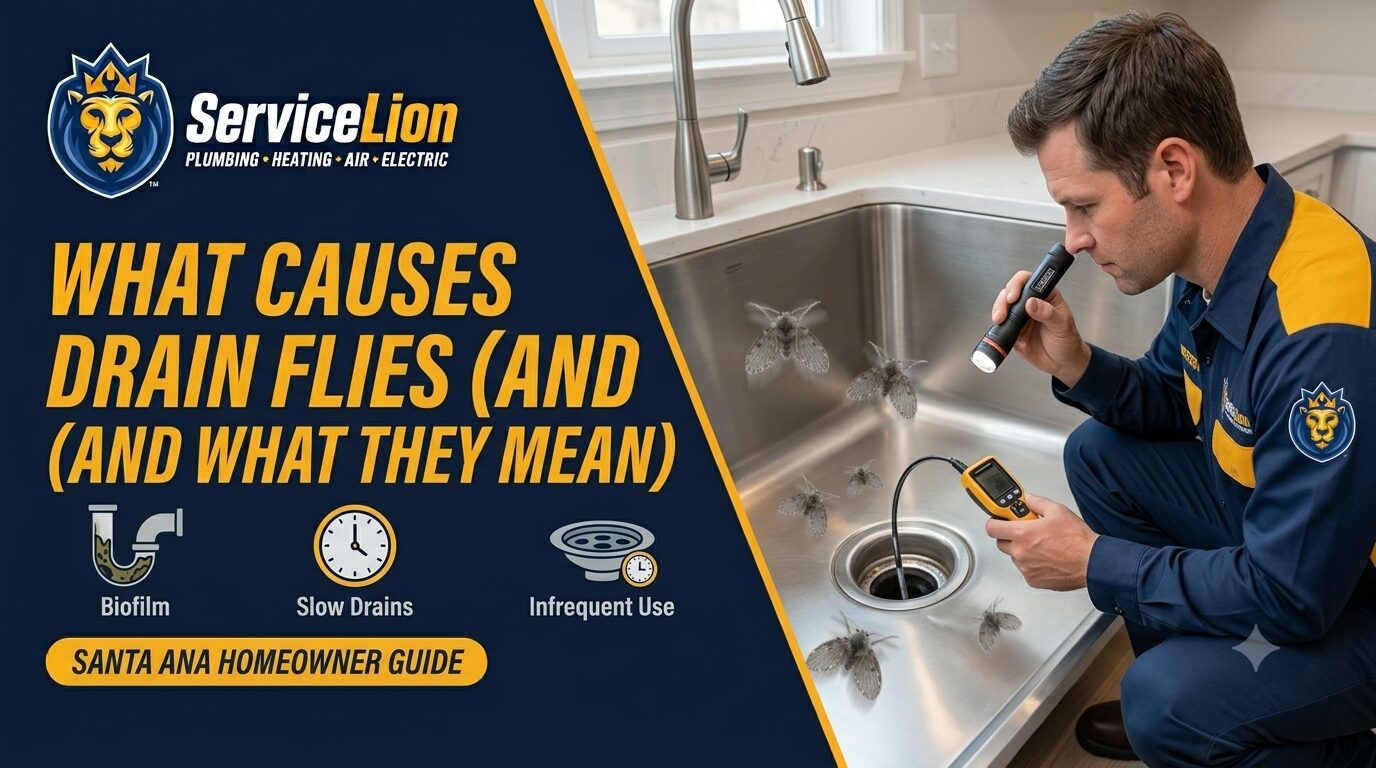
If you’ve noticed tiny flies hovering around your kitchen sink, bathroom drain, or shower, chances are you’re dealing with drain flies.
While they’re harmless to people, drain flies are often a sign that something isn’t quite right inside your plumbing system. Simply spraying them with insecticide or swatting them away won’t solve the problem because the source of the infestation usually remains hidden inside your drains.
If you’re seeing drain flies in your Santa Ana home, here’s what causes them, what they may be telling you about your plumbing, and how to eliminate them for good.
What Are Drain Flies?
Drain flies, sometimes called sewer flies, moth flies, or filter flies, are tiny insects that thrive in damp environments where organic material accumulates.
They are easy to recognize by their:
- Small size
- Fuzzy, moth-like wings
- Gray or tan color
- Weak, fluttering flight
Unlike fruit flies, drain flies tend to stay close to the drains where they breed rather than flying throughout the home.
Why Are They Living in Your Drains?
Drain flies don’t actually feed on your plumbing.
Instead, they lay their eggs inside the slimy organic buildup that forms on the inside walls of drains.
This buildup may contain:
- Grease
- Soap scum
- Hair
- Food particles
- Biofilm
- Organic debris
The moist environment provides the perfect place for larvae to develop before becoming adult flies.
Slow or Dirty Drains
One of the most common causes of drain flies is a drain that isn’t flowing properly.
When water drains slowly, organic material has more opportunity to stick to the inside of the pipe and accumulate over time.
Kitchen sinks, bathroom sinks, showers, floor drains, and utility sinks can all become breeding grounds if they’re not cleaned regularly.
Infrequently Used Drains
Floor drains, guest bathroom sinks, basement drains, and laundry room drains that aren’t used often can also attract drain flies.
Standing water and stagnant organic material create ideal breeding conditions.
Running water periodically through these drains can help prevent infestations.
Clogged Sewer or Drain Lines
If you’re seeing large numbers of drain flies throughout the house, the problem may extend beyond a single sink.
Partially clogged drain lines or sewer lines can trap significant amounts of organic debris, allowing flies to reproduce in much larger numbers.
Other warning signs may include:
- Slow drains
- Gurgling fixtures
- Sewer odors
- Frequent drain backups
These symptoms should be professionally inspected.
Hidden Plumbing Leaks
Drain flies prefer damp environments.
A hidden plumbing leak beneath a sink, behind a wall, or in a crawl space can create moisture that supports breeding even if your drains appear clean.
If you notice drain flies along with water stains or musty odors, a plumbing inspection is a good idea.
Why Store-Bought Sprays Usually Don’t Work
Many homeowners try to eliminate drain flies by spraying the adult insects.
Unfortunately, this only removes the flies you can see.
The eggs and larvae remain inside the drain where they continue developing.
Unless the organic buildup inside the drain is removed, new flies will continue emerging.
The real solution is eliminating the breeding source—not just the insects themselves.
How Plumbers Solve the Problem
Professional drain cleaning removes the buildup that allows drain flies to survive.
Depending on the condition of the drain, a plumber may recommend:
- Mechanical drain cleaning
- Biofilm removal
- Hydro jetting
- Sewer camera inspection
- Sewer line cleaning
If a larger plumbing issue is contributing to the infestation, identifying it early can prevent recurring problems.
Can You Prevent Drain Flies?
Yes.
A few simple habits can reduce the chances of an infestation:
- Avoid pouring grease down kitchen drains.
- Clean sink and shower drains regularly.
- Flush infrequently used drains with water.
- Address slow drains promptly.
- Repair plumbing leaks as soon as they’re discovered.
Keeping drains clean removes the organic material drain flies depend on to reproduce.
Drain flies may seem like a minor nuisance, but they’re often a sign that your plumbing system needs attention.
If the flies keep returning despite cleaning your drains, a professional inspection can identify the underlying cause and help prevent future infestations.
Service Lion Plumbing Heating Air Electric provides professional drain cleaning, sewer camera inspections, and plumbing diagnostics throughout Santa Ana and Orange County. If drain flies have taken over your home, call (657) 530-5808 or schedule online to have one of our licensed plumbers find—and eliminate—the source of the problem.
FAQ
Are drain flies harmful?
Drain flies don’t bite or spread disease like mosquitoes, but they can multiply quickly and usually indicate organic buildup inside your plumbing system.
Will bleach get rid of drain flies?
Bleach may kill some larvae, but it usually doesn’t remove the biofilm where eggs are laid. Professional drain cleaning is often more effective.
Why do drain flies keep coming back?
If the organic material inside the drain isn’t completely removed, eggs and larvae continue developing, causing the infestation to return.
Can drain flies indicate a sewer problem?
Yes. Large infestations combined with slow drains, sewer odors, or frequent backups may indicate a clogged or damaged sewer line.
When should I call a plumber for drain flies?
If drain flies persist after cleaning your drains, or if they’re accompanied by slow drainage, recurring clogs, or sewer odors, it’s time to schedule a professional plumbing inspection.