

The lights in one room suddenly go out. Several outlets along the same wall stop working. But when you check the rest of the house, everything seems completely normal.
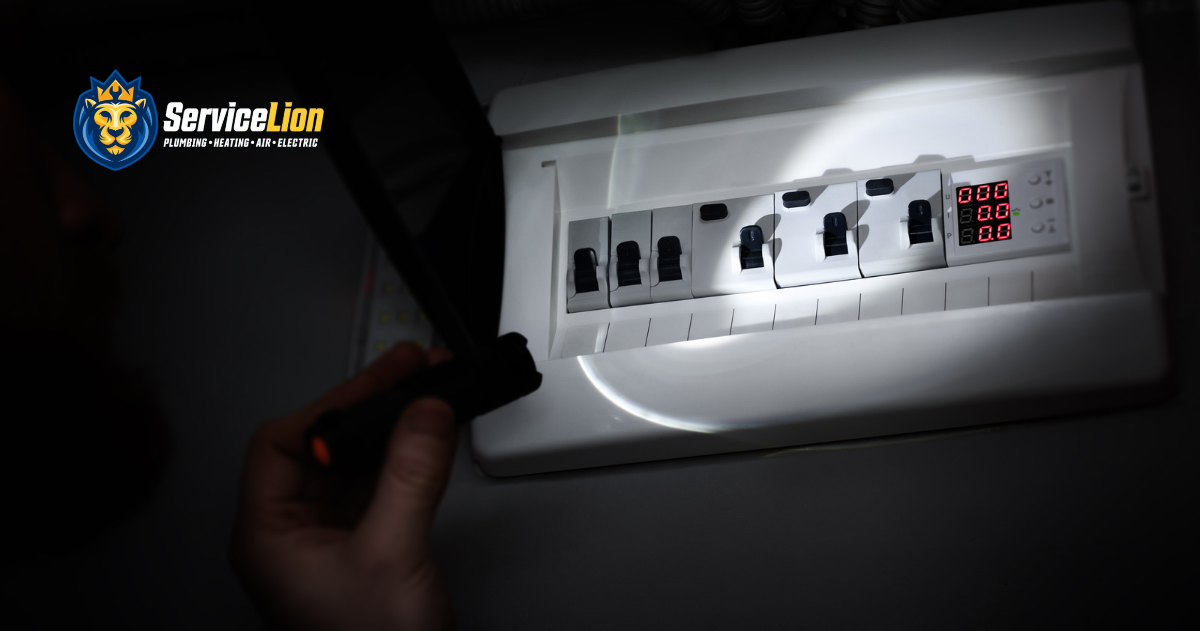
You head to the electrical panel expecting to find a tripped breaker—but every breaker appears to be in the ON position.
When there’s no power to one circuit while the rest of your Orange home still has electricity, the problem is usually isolated somewhere along that particular circuit.
Sometimes the solution is as simple as resetting a GFCI outlet. Other times, a faulty breaker, loose connection, damaged outlet, or wiring problem may be responsible.
Here’s what you can safely check and when it’s time to call an electrician.
Start by Checking the Circuit Breaker
Even if the breaker looks like it’s still ON, check it carefully.
Some breakers don’t move all the way to the OFF position when they trip. Instead, the handle may sit somewhere between ON and OFF, making the trip easy to miss.
Look for the breaker associated with the affected room or outlets.
If you find one that appears tripped, you can reset it by moving it fully to OFF and then back to ON.
If the breaker immediately trips again, don’t keep resetting it.
A breaker that repeatedly trips may be responding to an overload, short circuit, ground fault, or another electrical problem that needs to be diagnosed.
Look for a Tripped GFCI Outlet
This is one of the easiest problems to overlook.
GFCI outlets are designed to shut off electricity when they detect certain electrical imbalances.
You’ll commonly find them in or around:
- Bathrooms
- Kitchens
- Garages
- Laundry areas
- Outdoor spaces
- Other locations where electricity may be exposed to moisture
Here’s where it gets confusing: one GFCI outlet can sometimes protect several other outlets farther along the same circuit.
That means an outlet in your garage could trip and cause another outlet elsewhere on the circuit to lose power.
Look around the affected area and nearby rooms for a GFCI outlet with TEST and RESET buttons.
If you find one that’s tripped, press RESET.
If it won’t reset or immediately trips again, stop troubleshooting and have the circuit inspected.
An Outlet Could Have Failed
Electrical outlets can wear out over time.
Internal connections may loosen, components may deteriorate, or heat damage may develop.
If an outlet fails somewhere along a circuit, it can sometimes affect outlets located farther downstream.
You may notice warning signs such as:
- Discoloration around an outlet
- A loose-fitting plug
- Buzzing or crackling
- Intermittent power
- An outlet that feels warm
- A burning or electrical smell
If you notice any of these symptoms, don’t continue using the affected outlet.
A Loose Connection May Be Interrupting the Circuit
Electricity travels from the electrical panel through wiring and connections before reaching each outlet, switch, or fixture.
If one of those connections becomes loose, power may stop at that point.
Everything before the loose connection may continue working while devices farther along the circuit lose power.
This can make the problem seem random.
For example, one bedroom outlet may work normally while the next three outlets on the same circuit are completely dead.
Finding the exact point where power is being interrupted usually requires electrical testing.
A Light Switch Could Be Controlling the Outlet
Before assuming an outlet has failed, check nearby wall switches.
Some homes have switched outlets designed for floor or table lamps.
If someone accidentally flipped the controlling switch, the outlet may appear to have suddenly lost power.
Try nearby switches and see whether power returns.
If several outlets and fixtures are affected, however, the issue is more likely somewhere in the circuit.
The Breaker Itself Could Be Faulty
Circuit breakers are designed to protect your home’s wiring, but breakers themselves can eventually fail.
A breaker may appear to be in the ON position while no longer supplying power correctly.
This isn’t something to diagnose by opening the electrical panel yourself.
Your electrical panel contains energized components that can remain dangerous even when individual breakers are switched off.
A licensed electrician can test whether the breaker is actually delivering power to the circuit.
An Overloaded Circuit May Have Triggered the Problem
Think about what was happening immediately before the power disappeared.
Did you plug in a:
- Space heater
- Vacuum
- Hair dryer
- Microwave
- Power tool
- Portable air conditioner
- Other high-demand appliance?
If several devices were operating on the same circuit, the electrical load may have caused the breaker or another protective device to trip.
Unplug unnecessary devices before resetting the circuit.
If the problem repeatedly happens whenever certain appliances are used together, your electrical system may need an additional or dedicated circuit rather than repeated breaker resets.
Could Damaged Wiring Cause a Dead Circuit?
Yes.
Wiring can become damaged because of age, heat, loose connections, remodeling work, pests, or other conditions.
Because most residential wiring is hidden behind walls and ceilings, the problem isn’t always visible.
Possible warning signs include:
- Burning smells
- Buzzing or crackling
- Flickering before the power went out
- Warm or discolored outlets
- Repeated breaker trips
- Power cutting in and out
These symptoms deserve professional attention.
What Can You Safely Check Yourself?
If one circuit suddenly loses power, you can start with a few basic checks:
- Identify everything that lost power. Determine whether it’s one outlet, several outlets, lights, or an entire room.
- Check the breaker panel. Look for a breaker that’s fully or partially tripped.
- Reset the breaker once. Move it fully OFF before switching it back ON.
- Look for GFCI outlets. Check bathrooms, kitchens, garages, outdoor areas, and nearby rooms.
- Unplug recently used appliances. One device may have triggered the problem.
- Check nearby switches. A switched outlet may simply have been turned off.
If these steps don’t restore power, further troubleshooting usually requires electrical testing.
When Should You Call an Electrician?
Schedule professional electrical service if:
- The breaker isn’t tripped but the circuit still has no power.
- A breaker won’t reset.
- The breaker repeatedly trips.
- A GFCI won’t reset.
- Several outlets suddenly stopped working.
- You hear buzzing or crackling.
- An outlet or switch feels unusually warm.
- You notice discoloration or melting.
- There’s a burning or electrical smell.
- Power repeatedly cuts in and out.
If you see smoke, sparks, or signs of active overheating, stop using the affected circuit and treat the situation as an electrical emergency.
Don’t Assume a Dead Circuit Will Fix Itself
When one section of your house loses electricity while everything else works normally, something has interrupted power along that circuit.
The cause could be a tripped GFCI or hidden breaker trip, but it could also involve a failed outlet, loose connection, faulty breaker, overloaded circuit, or damaged wiring.
If basic checks don’t restore power, repeatedly flipping breakers or taking outlets apart isn’t the safest next step.
Service Lion Plumbing Heating Air Electric provides electrical troubleshooting and repairs throughout Orange and Orange County. If one circuit in your home has no power or several outlets suddenly stopped working, call (657) 530-5808 or schedule online to have one of our electricians inspect the problem.
FAQ
Why do I have no power to several outlets but the breaker isn’t tripped?
Possible causes include a tripped GFCI outlet, a breaker that has tripped without visibly moving far, a failed outlet, a loose connection, or another wiring problem.
Can one GFCI outlet cause several outlets to stop working?
Yes. One GFCI can protect additional outlets downstream on the same circuit. If it trips, several outlets may lose power at once.
Why won’t my circuit breaker reset?
A breaker may refuse to reset if there’s still an overload, short circuit, ground fault, or another electrical problem. Don’t repeatedly force it back on.
Can a bad outlet cause other outlets to stop working?
Depending on how the circuit is wired, a failed or loose connection at one outlet can interrupt power to other outlets farther along the circuit.
When should I call an electrician in Orange?
Call an electrician if basic breaker and GFCI checks don’t restore power, the problem keeps returning, several outlets are affected, or you notice heat, buzzing, burning smells, sparks, or other signs of an electrical fault.