

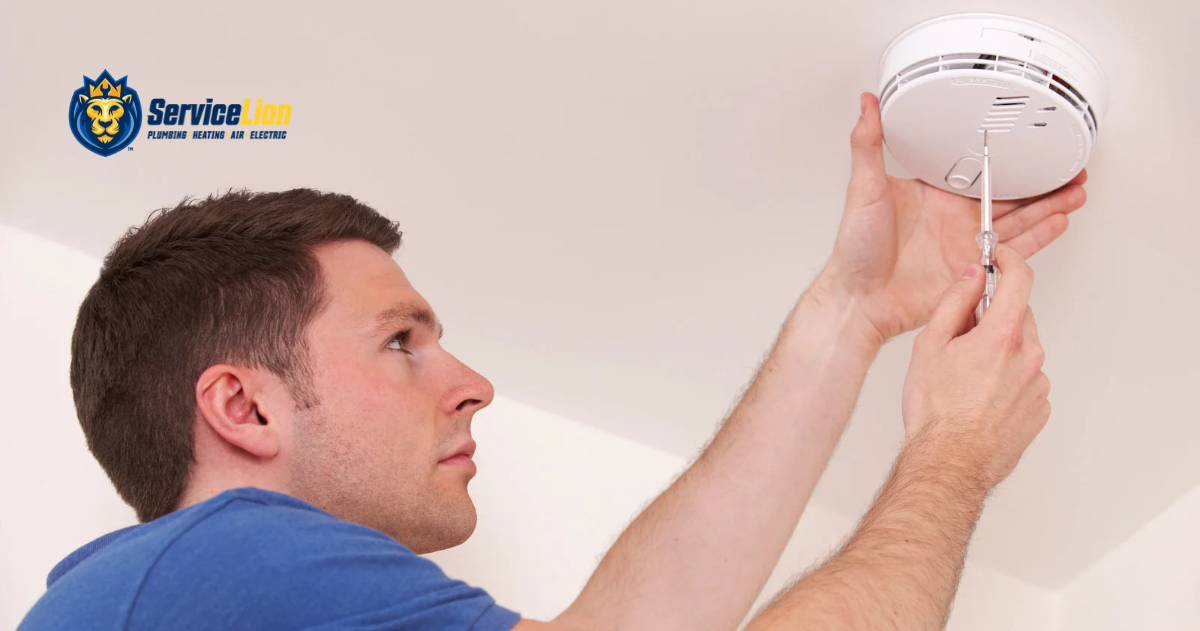
It’s 3 a.m., and the house is quiet, except for a single high-pitched chirp every minute or so. You’re not alone. A chirping smoke detector is one of the most common late-night household annoyances, and hardwired alarms can be especially confusing because they’re connected to your home’s electrical system.
In Corona and other inland communities, winter nights get noticeably colder than they do along the coast. That temperature drop is part of the reason so many smoke detectors start chirping in the middle of the night. Here’s what a chirp usually means and how to handle it.
Why Do Hardwired Smoke Detectors Have Batteries?
Hardwired smoke detectors run on household power, but most also have a backup battery. The battery keeps the alarm working during a power outage. When that backup battery gets low, the detector chirps to let you know, even though it’s still connected to power.
Some newer models have a sealed 10-year battery that can’t be replaced. When those reach the end of their life, the entire unit needs replacement.
Common Reasons a Hardwired Detector Chirps
A low backup battery. This is the most common cause. A chirp roughly every 30 to 60 seconds often points to the battery.
Cold nighttime temperatures. Battery voltage drops slightly as temperatures fall. A battery that’s nearly depleted may hold up during the day and start chirping in the early morning hours when the house is coolest.
The detector has reached end of life. Smoke detectors are generally designed to be replaced about every 10 years. Many models chirp to signal they’ve reached that point, and a new battery won’t stop it. Check the manufacture date printed on the back of the unit.
Dust, insects, or debris. Particles inside the sensing chamber can cause chirps or false alarms. This is more likely in garages, near attic access, or in homes after a remodel.
Battery not seated correctly. A battery that’s loose, the wrong type, or still has a pull tab partially in place can trigger chirping.
Interconnected alarms. Many hardwired systems are linked so that when one detects smoke, all of them sound. With chirping, though, the problem detector is usually the one actually chirping. Listen closely or watch for a flashing indicator light to find it.
A power interruption. A brief outage or a tripped breaker on the alarm circuit can make detectors chirp as they switch to backup power.
How to Stop the Chirping Safely
With a sturdy ladder and a helper if possible:
- Identify which detector is chirping.
- Replace its backup battery with the exact type listed on the unit.
- Press and hold the TEST button to reset it and confirm it sounds.
- Check the manufacture date. If it’s 10 or more years old, plan to replace it.
- Gently clean the vents with a vacuum brush attachment.
- If several alarms chirp at once, check whether the breaker for the alarm circuit has tripped.
On many models, the battery is reached by twisting the detector off its mounting base. If the unit is attached with wiring you can’t easily disconnect, or you’re unsure, stop and call a professional. Never cut, splice, or handle exposed wires.
Avoid removing a detector and leaving it disconnected. Every alarm in your home plays a role in early warning.
When to Call an Electrician
It’s time for professional help if:
- A detector keeps chirping after a battery change and reset
- Your detectors are 10 or more years old and need replacement
- Several alarms chirp or sound with no obvious cause
- The alarm circuit’s breaker keeps tripping
- You want to add detectors or update an older system
An electrician can replace hardwired detectors with compatible models, confirm interconnected alarms communicate properly, and check the circuit that powers them.
Service Lion Plumbing Heating Air Electric helps homeowners in Corona and surrounding communities with smoke detector replacement, electrical safety checks, and residential electrical repairs. If your hardwired smoke detector keeps chirping, call (657) 337-3622 or schedule electrical service online.
Frequently Asked Questions
Why is my hardwired smoke detector chirping if it has power?
Most hardwired detectors have a backup battery, and the chirp usually means that battery is low. It can also signal that the detector has reached the end of its lifespan.
Why does my smoke detector only chirp at night?
Homes cool down overnight, and lower temperatures can slightly reduce battery voltage. A battery that’s almost depleted may only drop low enough to trigger a chirp in the cooler early morning hours.
I replaced the battery, so why is it still chirping?
Press and hold the TEST button to reset the alarm after changing the battery. If it still chirps, check the battery type and position, then check the manufacture date. Many detectors chirp at end of life regardless of the battery.
How long do hardwired smoke detectors last?
Most manufacturers recommend replacing smoke detectors about every 10 years. The manufacture date is typically printed on the back of the unit.
Can I replace a hardwired smoke detector myself?
Replacing one involves working with your home’s electrical wiring and choosing a compatible model for interconnected systems. For safety and reliability, we recommend having a licensed electrician handle it.