

It’s the middle of a hot summer day in La Habra Heights. Your AC is running, but the house keeps getting warmer.
You check the system and notice something strange: ice.
It might be covering the refrigerant line, forming around the indoor AC equipment, or hidden inside the air handler on the evaporator coil itself.
It seems backwards—how can an air conditioner freeze when it’s hot outside?
A frozen AC coil is actually a fairly common cooling problem, and continuing to run the system while it’s frozen can make matters worse.
Here’s why evaporator coils freeze, what happens when they do, and what you should do if you spot ice.
What Does the Evaporator Coil Do?
Your evaporator coil is located inside the indoor portion of your air conditioning system.
As warm air from your home passes over the cold coil, refrigerant inside absorbs heat from that air. The cooled air is then circulated back through your home.
Moisture in the indoor air also condenses on the coil and drains away through the condensate system.
For this process to work correctly, the coil needs sufficient airflow and the refrigeration system needs to operate properly.
When something disrupts that balance, the temperature of the coil can drop too low.
Moisture then freezes on its surface—and once ice begins forming, the problem can quickly get worse.
Restricted Airflow Can Cause the Coil to Freeze
One of the most common reasons for an evaporator coil freezing is insufficient airflow.
Warm indoor air needs to continuously move across the coil. Without enough airflow, the coil can become excessively cold.
Common airflow problems include:
- A dirty air filter
- Blocked return vents
- Closed or obstructed supply vents
- Dirty evaporator coils
- Blower motor problems
- Ductwork restrictions
A heavily clogged filter is one of the easiest things for homeowners to check.
If your filter is covered in dust and debris, replace it—but don’t assume that automatically solves the entire problem if the AC has already frozen.
Low Refrigerant Can Also Cause Freezing
Low refrigerant can affect the pressure and temperature inside the cooling system, potentially causing the evaporator coil to become too cold and freeze.
Possible signs of a refrigerant problem include:
- Ice on the evaporator coil
- Ice on refrigerant lines
- AC running for long periods
- Weak cooling
- Warm or insufficiently cool air from vents
Refrigerant doesn’t normally disappear through regular AC operation.
If your system is low on refrigerant, there may be a leak that needs to be located and addressed.
A Dirty Evaporator Coil Can Make Things Worse
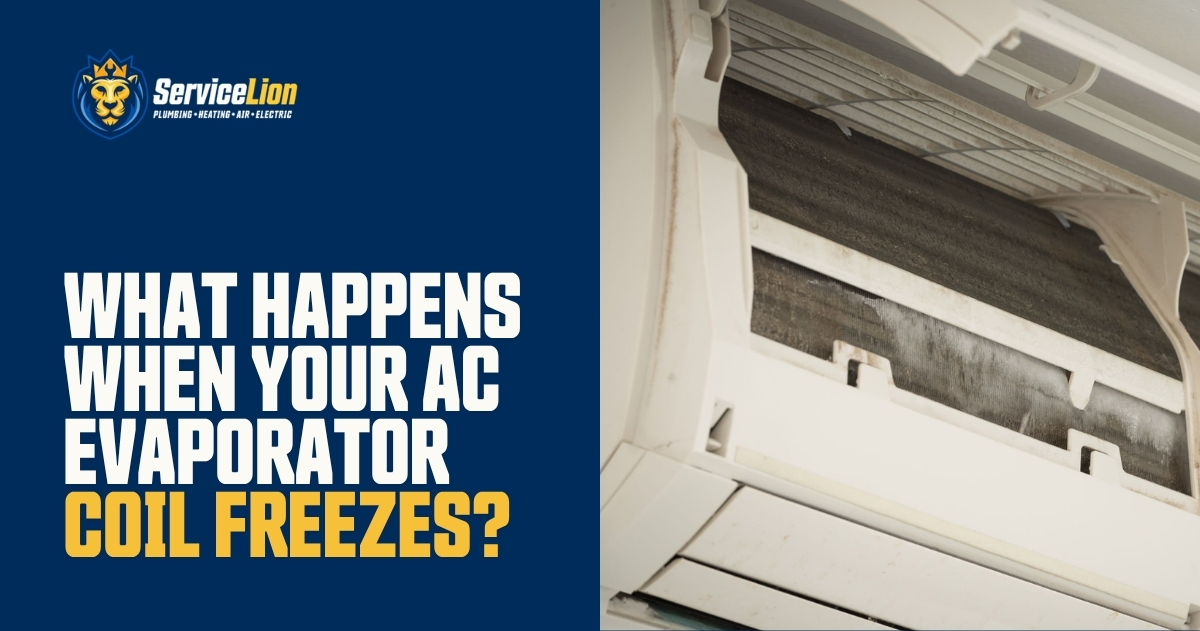
Dust and debris can accumulate on the evaporator coil over time.
That layer of buildup interferes with airflow and heat transfer.
During heavy summer AC use in La Habra Heights, an already dirty coil may struggle even more as the system runs for longer periods.
Professional AC maintenance can help identify dirty coils and other airflow issues before they contribute to freezing.
What Happens When the Coil Freezes?
Once ice begins covering the evaporator coil, airflow becomes even more restricted.
That creates a cycle:
The coil gets too cold, moisture freezes, ice blocks airflow, and the reduced airflow allows even more ice to form.
Eventually, you may notice:
- Very little air coming from the vents
- AC running constantly
- Indoor temperature continuing to rise
- Ice around refrigerant lines
- Water around the indoor unit
At that point, leaving the AC running won’t cool your house faster.
It can actually make the problem worse.
Why Is There Water Around the AC Afterward?
When you turn the system off, the ice eventually begins melting.
Depending on how much ice has accumulated, that can produce more water than the condensate system normally handles at once.
You may notice water collecting around the indoor unit or drain pan.
This doesn’t necessarily mean the condensate system caused the original problem. The water may simply be the result of the frozen coil thawing.
However, any significant water around your HVAC equipment should still be addressed to prevent damage.
What Should You Do If Your AC Coil Is Frozen?
If you notice ice on your AC system:
- Turn off the cooling. Continuing to run the compressor while the coil is frozen can put additional strain on the system.
- Check your air filter. If it’s heavily clogged, replace it.
- Make sure vents aren’t blocked. Furniture, rugs, or other objects shouldn’t obstruct return or supply vents.
- Allow the system to thaw completely. Don’t try to chip or scrape ice from the coil.
- Schedule AC service if the problem returns or the cause isn’t obvious.
Avoid trying to speed up thawing with sharp objects or direct heat, which can damage the coil.
Can You Just Turn the AC Back On After It Thaws?
The AC may begin cooling normally again once the ice melts, particularly if a severely dirty filter caused the problem.
But freezing is a symptom—not the actual diagnosis.
If the coil freezes again, there’s an underlying problem that needs attention.
Repeated freezing can indicate refrigerant issues, blower problems, dirty coils, or other airflow restrictions that require professional inspection.
Preventing a Frozen AC Coil
Routine maintenance can reduce the chances of your evaporator coil freezing during peak summer.
Helpful steps include:
- Replace air filters regularly.
- Keep supply and return vents unobstructed.
- Schedule routine AC maintenance.
- Pay attention to changes in airflow.
- Have refrigerant problems professionally diagnosed.
- Don’t ignore an AC that’s suddenly taking much longer to cool your home.
Catching a cooling or airflow problem early is much easier than discovering a block of ice inside your AC on one of the hottest days of the year.
Don’t Keep Running an AC With a Frozen Coil
Ice on an air conditioner isn’t a sign that the system is producing extra-cold air.
It’s a sign that something isn’t working properly.
Restricted airflow, a dirty coil, blower problems, or low refrigerant can all contribute to an evaporator coil freezing. The sooner the underlying cause is identified, the sooner your AC can return to cooling your home normally.
Service Lion Plumbing Heating Air Electric provides AC inspections, maintenance, and repairs throughout La Habra Heights. If your AC is freezing, airflow has become weak, or your home isn’t cooling properly, call (657) 530-5808 or schedule online to have one of our HVAC technicians inspect the system.
FAQ
Why does my AC coil freeze when it’s hot outside?
The outdoor temperature isn’t what causes the coil to freeze. Restricted airflow or problems within the refrigeration system can cause the evaporator coil temperature to fall low enough for condensation to freeze.
Can a dirty air filter cause a frozen AC coil?
Yes. A heavily clogged filter can restrict airflow across the evaporator coil, which may contribute to freezing.
Should I turn my AC off if I see ice?
Yes. Turn off the cooling and allow the system to thaw. Continuing to run a frozen AC can worsen the problem and place additional strain on the equipment.
How long does a frozen AC coil take to thaw?
It can take several hours depending on how much ice has accumulated. Don’t attempt to scrape the ice off or use direct heat to speed up the process.
When should I call for AC repair in La Habra Heights?
Schedule service if the coil freezes repeatedly, your AC isn’t cooling properly, airflow remains weak, you see ice on the refrigerant lines, or the cause of the freezing isn’t obvious.