

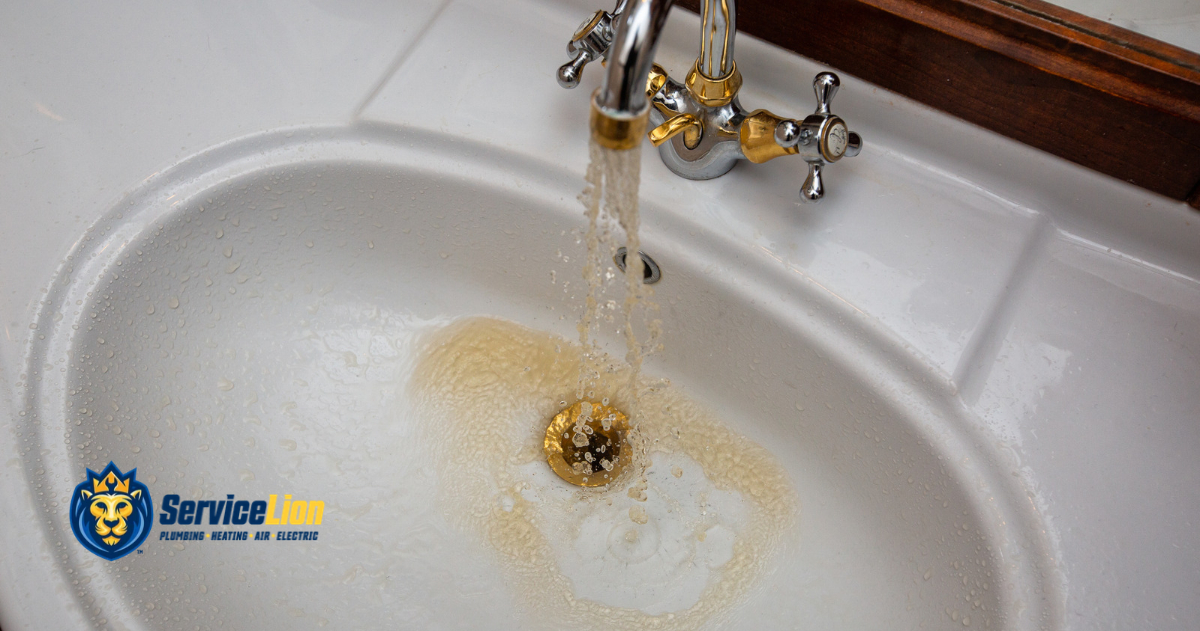
Turning on your faucet and seeing brown, yellow, or reddish water instead of clear water can be concerning. Is something wrong with your pipes? Could your water heater be rusting? Or is the problem coming from the local water supply?
Brown or rusty water from a faucet can have several causes, ranging from disturbed sediment to corrosion inside aging plumbing. While some cases are temporary, recurring discoloration may indicate a problem that needs professional attention.
For homeowners in La Habra Heights, understanding where the discoloration occurs is the first step toward identifying the source.
What Causes Brown or Rusty Water?
Water can become discolored when sediment, rust particles, or other materials enter the water flowing through your plumbing system.
Common causes include:
- Corrosion inside older metal pipes
- Sediment or corrosion in a water heater
- Recent plumbing repairs or water shutoffs
- Disturbances in the municipal water supply
- Rust or debris collecting near individual fixtures
The location and timing of the discoloration often provide useful clues about which of these problems may be responsible.
Brown Water Coming From Just One Faucet
If the water looks brown at one faucet but runs clear everywhere else, the problem may be limited to that fixture or the plumbing supplying it.
Possible sources include a corroded shutoff valve, deteriorating supply line, or sediment trapped inside the faucet.
Try comparing the hot and cold water at the affected fixture. Then check another faucet nearby.
If the discoloration only appears briefly when the faucet is first opened, particles may have accumulated while the fixture wasn’t being used.
However, if the water continues to appear rusty or discolored, the faucet and its supply connections may need inspection.
Brown Hot Water but Clear Cold Water
When only the hot water appears brown or rusty, the water heater becomes an important area to investigate.
Tank-style water heaters can accumulate sediment over time. As the unit ages, corrosion may also develop inside the tank, especially if protective components have deteriorated.
Signs that your water heater may need attention include:
- Rust-colored water from multiple hot-water faucets
- Unusual rumbling or popping noises
- Reduced hot water performance
- Visible rust around the tank or its connections
- Moisture or leaking near the water heater
Brown hot water doesn’t automatically mean the water heater needs replacement. The discoloration could also come from the hot-water piping.
A plumber can inspect the system to determine whether maintenance, repairs, or replacement are appropriate.
Aging Pipes May Be Releasing Rust
Older homes may contain galvanized steel or other metal plumbing materials that can corrode internally.
Over time, corrosion can produce rust particles that enter the water when a faucet is opened.
This may be especially noticeable after water has been sitting in the pipes overnight.
You might notice:
- Brown water first thing in the morning
- Discoloration that clears after running the faucet
- Rust-colored particles in the water
- Reduced water flow at certain fixtures
- Discoloration that gradually becomes more frequent
If your La Habra Heights home has older plumbing, recurring rusty water may be a reason to have the pipes evaluated.
Recent Water Main Work Can Disturb Sediment
Sometimes, the problem doesn’t originate inside your home.
Water main repairs, hydrant flushing, or changes in water flow can disturb sediment that has settled inside public water lines.
When this happens, discolored water may enter several homes in the surrounding area.
If brown water suddenly appears throughout your house, check whether your water provider has announced maintenance or a service interruption.
You can also ask nearby neighbors whether they’re experiencing similar discoloration.
If multiple properties are affected, contact the water provider for guidance rather than assuming your home’s plumbing is responsible.
What Does the Color of the Water Mean?
The appearance of discolored water can provide clues, although color alone cannot identify the exact cause.
Yellow or Light Brown Water
A yellowish or light brown tint may be associated with small amounts of iron, rust, or suspended sediment.
Orange or Reddish Water
Orange or reddish discoloration is commonly associated with iron and rust particles. Corroding metal pipes or water heater components may contribute to this appearance.
Dark Brown Water
Darker discoloration may indicate a greater amount of disturbed sediment or other material in the water.
Because different problems can produce similar colors, identifying the source may require inspection or water testing.
Is Brown or Rusty Tap Water Safe to Use?
You shouldn’t assume discolored water is safe simply because the cause might be rust or sediment.
While iron-related discoloration isn’t necessarily a sign of dangerous contamination, the appearance of water alone cannot establish whether it’s safe to drink.
If your tap water suddenly turns brown:
- Avoid drinking or cooking with it until the source and safety are confirmed.
- Check whether both hot and cold water are affected.
- Contact your water provider if the discoloration affects the incoming cold-water supply or several fixtures.
- Follow any drinking-water advisories issued by the provider.
- Avoid washing light-colored laundry until the discoloration is resolved.
Boiling discolored water does not remove rust, sediment, or chemical contaminants.
If the problem appears limited to your home’s plumbing, a licensed plumber can help investigate the source.
When Should You Call a Plumber?
Not every instance of brown water requires major plumbing repairs. However, recurring discoloration should not be ignored.
Consider scheduling an inspection if:
- Brown or rusty water keeps returning.
- Only the hot water is discolored.
- Your home has older metal plumbing.
- The water heater shows visible corrosion or leaking.
- Discoloration is accompanied by reduced water flow.
- The problem appears limited to your property.
- Sediment continues appearing despite the water provider reporting no supply issue.
A professional inspection can help identify whether the discoloration is coming from a fixture, supply line, water heater, or another part of your plumbing system.
Clear Water Starts With Identifying the Source
Brown water doesn’t always indicate a major plumbing failure, but it’s worth understanding why the discoloration is happening.
If only one faucet is affected, the problem may be localized. If the hot water is rusty, the water heater or hot-water piping may be involved. If every faucet suddenly produces brown water, the incoming water supply deserves attention.
Service Lion Plumbing Heating Air Electric provides residential plumbing and water heater services throughout La Habra Heights and surrounding communities. If you’re dealing with persistent brown or rusty water, call (657) 567-7305 or schedule a plumbing inspection online.
Frequently Asked Questions
Why is my faucet suddenly producing brown water?
Sudden brown water can result from disturbed sediment, recent plumbing work, corrosion inside pipes, or changes in the public water supply. Checking whether the discoloration affects one faucet or multiple fixtures can help narrow down the source.
Why is my hot water brown but my cold water clear?
Discoloration limited to hot water may indicate sediment or corrosion inside the water heater or hot-water piping. A plumber can inspect these components to determine the cause.
Can rusty pipes make tap water brown?
Yes. As older metal pipes corrode, rust particles can break loose and enter the water. This may be particularly noticeable after the water has remained unused for several hours.
Will brown tap water clear up on its own?
Sometimes. Discoloration caused by temporary sediment disturbances may resolve once the water system stabilizes. However, persistent or recurring brown water should be investigated, especially if the cause is unknown.
When should I call a plumber in La Habra Heights for rusty water?
Contact a plumber if the discoloration repeatedly returns, affects only your property’s plumbing, appears connected to the water heater, or occurs alongside leaks, corrosion, or reduced water flow.